

Figure Christianity
Elizabeth of York
Elisabetha Anglica la
Queen of England
- Child of Edward IV of England and Elizabeth Woodville
- Married to Henry VII of England
- Dated 11 February 1466 CE – 11 February 1503 CE
A life on the record,
dated by its sources.
Roles, not beliefs
Overview
From Wikipedia, quoted unmodified under CC BY-SA 4.0; the article’s history is its list of authors.
Life
Affiliation
As a third party recorded it, often for one period of a life.
What this means
As the records give them: every row is a third party’s statement, not a self-description, and a role or an affiliation is often held for one period of a life only. An affiliation is not a belief, and this site does not ask anyone about theirs. For an office: which one, for how long, and where the records give an ordinal or the holders either side. Recognition of a tenure is never universal: contested lines appear as overlapping tenures rather than as one corrected sequence.
Family
The family of Elizabeth of York
Parents, spouses and children as the records give them.
Documented family only. A teacher, a successor or a patron is never drawn in this tree.
The family as a list · 25
Family 25
What this means
A documented human family relationship. Not a succession mechanism, and not religious transmission.
Does not imply a right to an office · transmission of a teaching · a religious affiliation held by the whole house · continuous rule · a marriage · a shared religious affiliation
Imported from Wikidata unless a tile says otherwise. Nothing here has been read by an editor.
-
 child of (child) Elizabeth Woodville Queen consort of England
 -
 child of (child) Edward IV of England King of England from 1461 to 1470 and 1471 to 1483
 -
 of the house House of York cadet branch of the English royal House of Plantagenet
 - parent of (child) Arthur, Prince of Wales Prince of Wales, Earl of Chester and Duke of Cornwall
- parent of (child) Edmund Tudor, Duke of Somerset Duke of Somerset
- parent of (child) Edward Tudor English prince
- parent of (child) Elizabeth Tudor English princess
-
 parent of (mother) Henry VIII of England King of England from 1509 to 1547 (1491–1547)
 - parent of (child) Katherine Tudor English royal
- parent of (child) Margaret Tudor Scottish Queen consort (1489-1541)
- parent of (child) Mary Tudor Queen of France from 1514 to 1515 (1496-1533)
- partner of George Neville, 1st Duke of Bedford English noble
-
 sibling of Anne of York Fifth daughter of King Edward IV of England and Elizabeth Woodville
 - sibling of Arthur Plantagenet, 1st Viscount Lisle Illegitimate son of King Edward IV of England
-
 sibling of Bridget of York English nun; (1480-1517)
 -
 sibling of Catherine of York English princess
 -
 sibling of Cecily of York English princess
 -
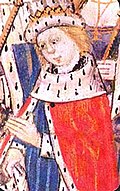 sibling of Edward V of England king of England in 1483 (1470-1483)
 - sibling of George Plantagenet, 1st Duke of Bedford English noble
- sibling of Margaret of York daughter of Edward IV
- sibling of Mary of York English princess; daughter of Edward IV of England and Elizabeth Woodville
- sibling of Richard Grey English knight (1457-1483); younger son of Elizabeth Woodville and Sir John Grey
-
 sibling of Richard of Shrewsbury, 1st Duke of York Second son of King Edward IV of England, younger of the princes in the Tower
 -
 sibling of Thomas Grey, 1st Marquess of Dorset 1/2 Brother of Edward V

Sources
Sources and evidence
Where every statement on this page comes from, and how each one stands.
26 statements on this record
- 13 Has references The statement cites something outside Wikimedia. That citation has not been checked here.
- 13 Imported Taken from Wikidata as it stands. Nobody here has read it. 2 of them cite only Wikipedia: one source, counted once.
Only this record’s own statements. What other records say about it is counted on theirs.
Three layers, three licences
- Text
- Wikipedia · CC BY-SA 4.0, quoted, not merged
- Pictures
- Wikimedia Commons · each file’s own terms
Review
Not yet read by an editor here. Every relationship on this page is an import.
Disagreements are kept, not resolved, and a count of sources is not a confidence score.


Keep exploring
More from Christianity
Its branches, councils, saints, offices and buildings — and where they stopped recognising each other.