

Figure Buddhist traditions
Eisai
荣西 zh 栄西 ja
Japanese monk
- Dated 15 December 1141 CE – 1 August 1215 CE
- Also called Myoan Eisai, Minnan Eisai, 1141-1215, Myōan Yōsai, 1141-1215
A life on the record,
dated by its sources.
Roles, not beliefs
Overview
From Wikipedia, quoted unmodified under CC BY-SA 4.0; the article’s history is its list of authors.
Life
Affiliation
As a third party recorded it, often for one period of a life.
What this means
As the records give them: every row is a third party’s statement, not a self-description, and a role or an affiliation is often held for one period of a life only. An affiliation is not a belief, and this site does not ask anyone about theirs. For an office: which one, for how long, and where the records give an ordinal or the holders either side. Recognition of a tenure is never universal: contested lines appear as overlapping tenures rather than as one corrected sequence.
_28_Apr%2C_2013_-_panoramio.jpg/250px-%E6%A1%9C%E3%81%A8%E6%AF%94%E5%8F%A1%E5%B1%B1%E5%BB%B6%E6%9A%A6%E5%AF%BA_(Enryaku-ji_with_Cherry_Blossoms)_28_Apr%2C_2013_-_panoramio.jpg)
Transmission
Teachers and students
Teaching passed from one person to another, in the direction of the arrows — not ancestry, and not succession.
What this means
In the direction the records give it. This is not biological ancestry and it is not institutional succession: a student who inherited no office still received the teaching, and an heir who received the office may have been taught by someone else entirely. It does not imply that teacher and student agreed.
Studied under 1
 Eisai Japanese monk
 Taught 2
Religious context
What the records tie them to
Founded, supported, associated with — as third parties recorded it.
What this means
A founding is an attribution, usually contested, and not a claim that the tradition began fully formed. Patronage is an act, not a belief: it says nothing about the religion of a population, and nothing about the patron’s own practice in every period of a life. Domains are as sources record them — for a saint, usually a patronage — rarely exclusive, and not the same in every account.
-
 Named as founder
Rinzai school
one of three sects of Zen in Japanese Buddhism -
 Named as founder
Kennin-ji Temple
building in Kyōto Prefecture, Japan -
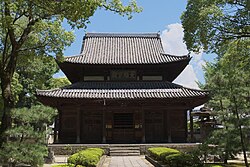 Named as founder
Shōfuku-ji Temple
Buddhist temple in Fukuoka Prefecture, Japan -
 Named as founder
Jufuku-ji Temple
building in Kamakura, Kanagawa Prefecture, Japan -
 Named as founder
Kongō Sanmai-in Temple
Buddhist temple in Wakayama Prefecture, Japan
Sources
Sources and evidence
Where every statement on this page comes from, and how each one stands.
5 statements on this record
- 5 Imported Taken from Wikidata as it stands. Nobody here has read it. 2 of them cite only Wikipedia: one source, counted once.
Only this record’s own statements. What other records say about it is counted on theirs.
Three layers, three licences
- Text
- Wikipedia · CC BY-SA 4.0, quoted, not merged
- Pictures
- Wikimedia Commons · each file’s own terms
Review
Not yet read by an editor here. Every relationship on this page is an import.
Disagreements are kept, not resolved, and a count of sources is not a confidence score.


Keep exploring
More from Buddhist traditions
Theravāda, Mahāyāna and Vajrayāna, their figures, sutras, lineages and monasteries.