
Figure Islam
Dhu'l-Qarnayn
ذو القرنين ar ذوالقرنین fa
Figure in the Quran
- Also called Qissat Dhulqarnayn, Qissat Dhi al-Qarnayn, Dhū'l-Qarnayn
A life on the record,
dated by its sources.
Roles, not beliefs

Overview
From Wikipedia, quoted unmodified under CC BY-SA 4.0; the article’s history is its list of authors.
Life
Affiliation
As a third party recorded it, often for one period of a life.
What this means
As the records give them: every row is a third party’s statement, not a self-description, and a role or an affiliation is often held for one period of a life only. An affiliation is not a belief, and this site does not ask anyone about theirs. For an office: which one, for how long, and where the records give an ordinal or the holders either side. Recognition of a tenure is never universal: contested lines appear as overlapping tenures rather than as one corrected sequence.
Texts
In the texts
Works this figure appears in. A work’s date is the source’s, not this figure’s.


Connections
How Dhu'l-Qarnayn connects
Grouped by the kind of relationship, because a successor is not a son and a shared symbol is not an influence.
Identification 9
What this means
One figure treated as another in some context. Not literal identity in all contexts, and usually a claim by a third party.
Does not imply literal identity in all contexts · that either tradition made the identification
Imported from Wikidata unless a tile says otherwise. Nothing here has been read by an editor.
-
.jpg/120px-Alexander_the_Great_mosaic_(cropped).jpg) identified with Alexander the Great king of Macedonia and conqueror of Achaemenid Persia (356–323 BC)
identified with Alexander the Great king of Macedonia and conqueror of Achaemenid Persia (356–323 BC) -
 identified with Cyrus the Great founder of the Achaemenid Empire (559–529 BC)
 -
 identified with Darius I The fourth and greatest Achaemenid emperor (522–486 BC)
 -
 identified with Gilgamesh Sumerian ruler and protagonist of the Epic of Gilgamesh
 -
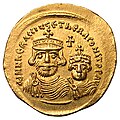 identified with Heraclius Byzantine emperor from 610 to 641
 -
 identified with Imru' al-Qays ibn 'Amr Second Lakhmid king
 - identified with Messiah ben Joseph Messiah in Jewish eschatology
-
.jpg/120px-Seleznikha_church_-_prophet_Moses_(18_c.).jpg) identified with Moses Abrahamic prophet said to have led the Israelites out of Egypt
identified with Moses Abrahamic prophet said to have led the Israelites out of Egypt -
_Miniature_(Oghuz_Khan_detail).jpg/120px-Ugh%C5%ABz_Kh%C4%81n_receives_a_messenger_from_Damascus_with_a_load_of_bows_W676%2C_Majma'_al-tawarikh_(circa_1425)_Miniature_(Oghuz_Khan_detail).jpg) identified with Oghuz Khagan legendary khan of the Turkic people, eponymous ancestor of Oghuz Turks
identified with Oghuz Khagan legendary khan of the Turkic people, eponymous ancestor of Oghuz Turks
Sources
Sources and evidence
Where every statement on this page comes from, and how each one stands.
11 statements on this record
- 11 Imported Taken from Wikidata as it stands. Nobody here has read it.
Only this record’s own statements. What other records say about it is counted on theirs.
Three layers, three licences
- Text
- Wikipedia · CC BY-SA 4.0, quoted, not merged
- Pictures
- Wikimedia Commons · each file’s own terms
Review
Not yet read by an editor here. Every relationship on this page is an import.
Disagreements are kept, not resolved, and a count of sources is not a confidence score.


Keep exploring
More from Islam
Schools of law and theology, the scholars who transmitted them, and the places they taught.