

Figure Christianity
Blaise Pascal
Blasius Pascalis la
French mathematician, physicist, inventor, writer, and Christian philosopher (1623-1662)
- Child of Étienne Pascal and Antoinette Begon
- Dated 19 June 1623 CE – 19 August 1662 CE
A life on the record,
dated by its sources.
Roles, not beliefs
Overview
From Wikipedia, quoted unmodified under CC BY-SA 4.0; the article’s history is its list of authors.
Life
Affiliation
As a third party recorded it, often for one period of a life.
What this means
As the records give them: every row is a third party’s statement, not a self-description, and a role or an affiliation is often held for one period of a life only. An affiliation is not a belief, and this site does not ask anyone about theirs. For an office: which one, for how long, and where the records give an ordinal or the holders either side. Recognition of a tenure is never universal: contested lines appear as overlapping tenures rather than as one corrected sequence.

Family
The family of Blaise Pascal
Parents, spouses and children as the records give them.
Documented family only. A teacher, a successor or a patron is never drawn in this tree.
The family as a list · 4
Family 4
What this means
A documented human family relationship. Not a succession mechanism, and not religious transmission.
Does not imply a right to an office · transmission of a teaching · a shared religious affiliation
Imported from Wikidata unless a tile says otherwise. Nothing here has been read by an editor.
_(cropped).jpg/120px-Liebigbilder_1900_-_Serie_635_-_Blaise_Pascal_recto_(FR-631136102_Inv_20754)_(cropped).jpg)
.jpg/120px-Clermont-Ferrand_-_Mus%C3%A9e_d'Art_Roger-Quilliot_-_Exposition_Les_myst%C3%A8res_de_Pascal_-_Jacqueline_Pascal_(anonyme_d'apr%C3%A8s_Philippe_de_Champaigne).jpg)
Connections
How Blaise Pascal connects
Grouped by the kind of relationship, because a successor is not a son and a shared symbol is not an influence.
Documented influence 8
What this means
A transmission argued from evidence. Not shared symbols, and not a short path through a database.
Does not imply shared symbols as evidence · a short path through a database
Imported from Wikidata unless a tile says otherwise. Nothing here has been read by an editor.
-
 was influenced by Augustine of Hippo Christian theologian, philosopher, and saint (354–430)
 -
.png/120px-Cornelius_Jansen%2C_Ev%C3%AAque_d'Ypres_(1585-1638).png) was influenced by Cornelius Jansen Bishop and theologian (1585-1638)
was influenced by Cornelius Jansen Bishop and theologian (1585-1638) -
 was influenced by Epictetus Greek Stoic philosopher (c. 50–c. 138)
 -
 was influenced by Michel de Montaigne French author, philosopher, and statesman (1533–1592)
 -
 was influenced by René Descartes French philosopher, mathematician, and scientist (1596–1650)
 -
.jpg/120px-Christoph_Bernhard_Francke_-_Bildnis_des_Philosophen_Leibniz_(ca._1695).jpg) influenced Gottfried Wilhelm Leibniz German mathematician and philosopher (1646–1716)
influenced Gottfried Wilhelm Leibniz German mathematician and philosopher (1646–1716) -
 influenced Henri Bergson French philosopher (1859–1941)
 -
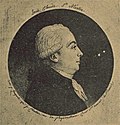 influenced Louis-Claude de Saint-Martin French philosopher
Sources
Sources and evidence
Where every statement on this page comes from, and how each one stands.
11 statements on this record
- 7 Has references The statement cites something outside Wikimedia. That citation has not been checked here.
- 4 Imported Taken from Wikidata as it stands. Nobody here has read it. 1 of them cite only Wikipedia: one source, counted once.
Only this record’s own statements. What other records say about it is counted on theirs.
Three layers, three licences
- Text
- Wikipedia · CC BY-SA 4.0, quoted, not merged
- Pictures
- Wikimedia Commons · each file’s own terms
Review
Not yet read by an editor here. Every relationship on this page is an import.
Disagreements are kept, not resolved, and a count of sources is not a confidence score.


Keep exploring
More from Christianity
Its branches, councils, saints, offices and buildings — and where they stopped recognising each other.