
.jpg/960px-Alan_Watts_UVM_15_June_1958_Hon._D.D_(cropped).jpg)
Figure Buddhist traditions
Alan Watts
艾倫·威爾遜·瓦茨 zh アラン・ワッツ ja
British American author and lecturer (1915–1973)
- Dated 6 January 1915 CE – 16 November 1973 CE
A life on the record,
dated by its sources.
Roles, not beliefs
Overview
From Wikipedia, quoted unmodified under CC BY-SA 4.0; the article’s history is its list of authors.
Life
Affiliation
As a third party recorded it, often for one period of a life.
What this means
As the records give them: every row is a third party’s statement, not a self-description, and a role or an affiliation is often held for one period of a life only. An affiliation is not a belief, and this site does not ask anyone about theirs. For an office: which one, for how long, and where the records give an ordinal or the holders either side. Recognition of a tenure is never universal: contested lines appear as overlapping tenures rather than as one corrected sequence.

Family
The family of Alan Watts
Parents, spouses and children as the records give them.
Documented family only. A teacher, a successor or a patron is never drawn in this tree.
The family as a list · 1
Family 1
What this means
A documented human family relationship. Not a succession mechanism, and not religious transmission.
Does not imply a right to an office · transmission of a teaching
Imported from Wikidata unless a tile says otherwise. Nothing here has been read by an editor.
Connections
How Alan Watts connects
Grouped by the kind of relationship, because a successor is not a son and a shared symbol is not an influence.
Documented influence 6
What this means
A transmission argued from evidence. Not shared symbols, and not a short path through a database.
Does not imply shared symbols as evidence · a short path through a database
Imported from Wikidata unless a tile says otherwise. Nothing here has been read by an editor.
-
-Portrait-Portr_14163_(cropped).tif/lossy-page1-120px-ETH-BIB-Jung%2C_Carl_Gustav_(1875-1961)-Portrait-Portr_14163_(cropped).tif.jpg) was influenced by Carl Jung Swiss psychiatrist and psychotherapist (1875–1961)
was influenced by Carl Jung Swiss psychiatrist and psychotherapist (1875–1961) -
 was influenced by D. T. Suzuki Japanese Buddhist scholar, Doctor of Letters (1870–1966)
 -
 was influenced by Jiddu Krishnamurti Indian spiritual philosopher, mystic, speaker and writer (1895–1986)
 -
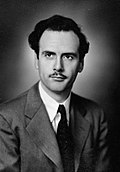 was influenced by Marshall McLuhan Canadian educator, philosopher, and scholar (1911–1980)
 -
.jpg/120px-Dr._Timothy_Leary_(1970_AP_Photo).jpg) was influenced by Timothy Leary American psychologist (1920–1996)
was influenced by Timothy Leary American psychologist (1920–1996) - was influenced by لودفيغ فيتغنشتاين Austrian philosopher and logician (1889–1951)
Sources
Sources and evidence
Where every statement on this page comes from, and how each one stands.
8 statements on this record
- 8 Imported Taken from Wikidata as it stands. Nobody here has read it. 2 of them cite only Wikipedia: one source, counted once.
Only this record’s own statements. What other records say about it is counted on theirs.
Three layers, three licences
- Text
- Wikipedia · CC BY-SA 4.0, quoted, not merged
- Pictures
- Wikimedia Commons · each file’s own terms
Review
Not yet read by an editor here. Every relationship on this page is an import.
Disagreements are kept, not resolved, and a count of sources is not a confidence score.


Keep exploring
More from Buddhist traditions
Theravāda, Mahāyāna and Vajrayāna, their figures, sutras, lineages and monasteries.