

Figure Christianity
Aelia Flaccilla
4th-century Roman empress
- Child of Flavius Claudius Antonius
- Married to Theodosius I
- Dated 31 March 356 CE – 386 CE
- Recognised as Saint
A life on the record,
dated by its sources.
Roles, not beliefs
Overview
From Wikipedia, quoted unmodified under CC BY-SA 4.0; the article’s history is its list of authors.
Family
The family of Aelia Flaccilla
Parents, spouses and children as the records give them.
Documented family only. A teacher, a successor or a patron is never drawn in this tree.
The family as a list · 7
Family 7
What this means
A documented human family relationship. Not a succession mechanism, and not religious transmission.
Does not imply a right to an office · transmission of a teaching · a religious affiliation held by the whole house · continuous rule · a shared religious affiliation
Imported from Wikidata unless a tile says otherwise. Nothing here has been read by an editor.
- child of (father) Flavius Claudius Antonius Roman politician, consul 382
- of the house Theodosian dynasty Roman imperial dynasty in late Antiquity, r. 392–457.
-
 parent of (mother) Arcadius Roman Emperor from 395–408 (377–408)
 -
 parent of (mother) Honorius 4th and 5th-century Roman emperor
 - parent of (mother) Pulcheria daughter of Roman Emperor Theodosius I
- sibling of Flavius Afranius Syagrius brother of Roman empress Aelia Flaccilla
-
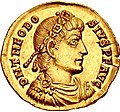 married to Theodosius I Roman emperor from 379 to 395
Sources
Sources and evidence
Where every statement on this page comes from, and how each one stands.
8 statements on this record
- 1 Has references The statement cites something outside Wikimedia. That citation has not been checked here.
- 7 Imported Taken from Wikidata as it stands. Nobody here has read it. 4 of them cite only Wikipedia: one source, counted once.
Only this record’s own statements. What other records say about it is counted on theirs.
Three layers, three licences
- Text
- Wikipedia · CC BY-SA 4.0, quoted, not merged
- Pictures
- Wikimedia Commons · each file’s own terms
Review
Not yet read by an editor here. Every relationship on this page is an import.
Disagreements are kept, not resolved, and a count of sources is not a confidence score.


Keep exploring
More from Christianity
Its branches, councils, saints, offices and buildings — and where they stopped recognising each other.