

Event Christianity
Council of Trent
Concilium Tridentinum la
19th Ecumenical Council of the Catholic Church
- Dated 13 December 1545 CE – 21 February 1563 CE
- Also called The Council of Trent, Tridentine council, Trento council
An occasion
on the record,
and who recorded it.
Each date on its own clock
Where
Where it took place
The places its record gives, with the dates each statement carries.
What this means
The places Council of Trent’s own record gives, one row per statement, each with the dates on its statement, in their order. A location is not by itself a claim about what happened there, or when. It does not imply that anything is documented to have happened there.
More
More events in Christianity
The events this collection holds nearest in date, in their order.
What this means
Listed because they are events in Christianity, as this one is, dated close to it — not because either record names the other. Being on the same shelf is not a connection, an influence or a sequence.
- 30 October 1536 CE
Reformation in Denmark–Norway and Holstein
the 16th century transition to Lutheranism in the realms ruled by the Copenhagen-based House of Oldenburg -
 1538 CE – 7 November 1550 CE
Icelandic Reformation
religious schism in the middle of the 16th century, when King Christian III of Denmark imposed Lutheranism on the Icelanders -
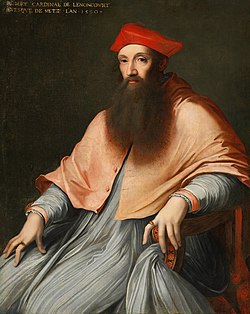 29 November 1549 CE – 7 February 1550 CE
1549–50 papal conclave
1549-1550 election of the Catholic pope - 23 February 1551 CE – 11 May 1551 CE
Stoglav synod
Church council held in Moscow in 1551 - 1552 CE
Schism of 1552
schism of the Church of the East that divided into into one faction in communion with Rome and the other remaining independent until the 19th century -
.jpg/250px-Portrait_of_Pope_Marcellus_II_Cervini_(Vatican_Museums_-_Musei_Vaticani%2C_Vatican).jpg) 5 April 1555 CE – 9 April 1555 CE
5 April 1555 CE – 9 April 1555 CEApril 1555 papal conclave
election
Connections
How Council of Trent connects
Grouped by the kind of relationship, because a successor is not a son and a shared symbol is not an influence.
Documented influence 3
What this means
A transmission argued from evidence. Not shared symbols, and not a short path through a database.
Does not imply shared symbols as evidence · a short path through a database
Imported from Wikidata unless a tile says otherwise. Nothing here has been read by an editor.
- influenced sedeprivationism Traditionalist Catholic doctrine that the current pope is duly-elected but lacks the authority to teach or govern unless he recants the Second Vatican Council
- influenced sedevacantism belief that the Roman-Catholic Church currently has no legitimate pope
-
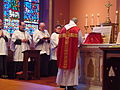 influenced traditionalist Catholicism set of traditionalist tendencies and movements within and outside the Catholic Church
Sources
Sources and evidence
Where every statement on this page comes from, and how each one stands.
3 statements on this record
- 3 Imported Taken from Wikidata as it stands. Nobody here has read it.
Only this record’s own statements. What other records say about it is counted on theirs.
Three layers, three licences
- Text
- Wikipedia · CC BY-SA 4.0, quoted, not merged
- Pictures
- Wikimedia Commons · each file’s own terms
Review
Not yet read by an editor here. Every relationship on this page is an import.
Disagreements are kept, not resolved, and a count of sources is not a confidence score.


Keep exploring
More from Christianity
Its branches, councils, saints, offices and buildings — and where they stopped recognising each other.