

Deity South Asian traditions
Sita
सीता sa சீதை ta
Hindu goddess; Rama's consort and eternal companion, incarnation of Lakshmi
A god is known
by the accounts
that name it.
Accounts kept apart
Family
The family of Sita
Parents, consorts and children as the accounts give them. Choose a consort to see the children the stories give the two.
Accounts differ about a god’s family. Where they name different parents, the tree sets them side by side instead of choosing one.
The family as a list · 8
Kinship in an account 7
What this means
Parentage as a named source tells it. Not an independently established biological relationship, and different accounts disagree.
Does not imply an independently established biological relationship · agreement between accounts · marriage as a legal institution · exclusivity, or a single canonical pairing · shared parentage in every account · descent from the same generation in a single tree
Imported from Wikidata unless a tile says otherwise. Nothing here has been read by an editor.
-
 child of (child) Bhūmi Hindu goddess representing Mother Earth
 -
 child of (father) Janaka father of Sita
 - child of (mother) Sunayana wife of Janaka; mother of Sita and Urmila
-
 parent of (mother) Kusha child of Sita
 -
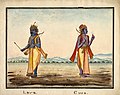 parent of (mother) Lava Hindu deity, son of Sita
 -
 partner of (spouse) Rama greatest and seventh incarnation of God, hero of the Ramayana, protector of Dharma
 - sibling of Urmila Wife of Lakshman
Family 1
What this means
A documented human family relationship. Not a succession mechanism, and not religious transmission.
Does not imply a right to an office · transmission of a teaching
Imported from Wikidata unless a tile says otherwise. Nothing here has been read by an editor.
Accounts
Where Sita appears
Each work is its own account. Where two disagree about a parent or a deed, both readings stand.
What this means
Works this figure is recorded as appearing in. Each is an account, not a chapter of one story: where two of them disagree about a parent or a deed, both readings stand and this site keeps the disagreement. The earliest account below is computed from these works, not stated by any source — a fact about which texts this collection holds and when they were written, not a date for the figure, who has none, and not a floor for the tradition, which is older than anything that survives of it.

Sources
Sources and evidence
Where every statement on this page comes from, and how each one stands.
7 statements on this record
- 3 Has references The statement cites something outside Wikimedia. That citation has not been checked here.
- 4 Imported Taken from Wikidata as it stands. Nobody here has read it. 1 of them cite only Wikipedia: one source, counted once.
Only this record’s own statements. What other records say about it is counted on theirs.
Three layers, three licences
- Text
- Wikipedia · CC BY-SA 4.0, quoted, not merged
- Pictures
- Wikimedia Commons · each file’s own terms
Review
Not yet read by an editor here. Every relationship on this page is an import.
Disagreements are kept, not resolved, and a count of sources is not a confidence score.
.jpeg/960px-UgrataraTemple2_(cropped).jpeg)
.jpeg)
Keep exploring
More from South Asian traditions
Hinduism and its schools, Jainism, Sikhism, and the Vedic material behind them.