

Deity Greek and Roman
Scylla
Σκύλλα grc
Nymph transformed into a sea monster by Circe in Greek mythology
A god is known
by the accounts
that name it.
Accounts kept apart
Family
The family of Scylla
Parents, consorts and children as the accounts give them. Choose a consort to see the children the stories give the two.
Accounts differ about a god’s family. Where they name different parents, the tree sets them side by side instead of choosing one.
The family as a list · 8
Kinship in an account 8
What this means
Parentage as a named source tells it. Not an independently established biological relationship, and different accounts disagree.
Does not imply an independently established biological relationship · agreement between accounts
Imported from Wikidata unless a tile says otherwise. Nothing here has been read by an editor.
- child of (child) Crataeis the mother of Scylla
-
 child of (child) Echidna ancient Greek mythological monster, the mother of monsters
 -
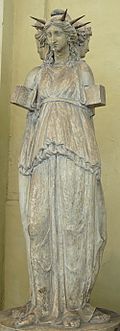 child of (child) Hecate Greek goddess
 -
 child of (mother) Lamia a female daemon who devoured children, usually described as having the upper body of a woman and lower half of a serpent
 -
 child of (father) Phorcys Greek sea god
 -
 child of (father) Poseidon one of the twelve Olympians presiding over the sea, storms, earthquakes and horses
 -
_Stroom-_en_waternimfen_(serietitel)_Nimpharum_oceanitidum%2C_ephydridum_potamidum_naiadum_(serietitel)%2C_RP-P-1898-A-19943.jpg/120px-Riviernimf_Styx_Stix_(titel_op_object)_Stroom-_en_waternimfen_(serietitel)_Nimpharum_oceanitidum%2C_ephydridum_potamidum_naiadum_(serietitel)%2C_RP-P-1898-A-19943.jpg) child of (mother) Styx Greek divinity of the river Styx
child of (mother) Styx Greek divinity of the river Styx -
 child of (child) Typhon deadly monster of Greek mythology
Sources
Sources and evidence
Where every statement on this page comes from, and how each one stands.
8 statements on this record
- 8 Imported Taken from Wikidata as it stands. Nobody here has read it.
Only this record’s own statements. What other records say about it is counted on theirs.
Three layers, three licences
- Text
- Wikipedia · CC BY-SA 4.0, quoted, not merged
- Pictures
- Wikimedia Commons · each file’s own terms
Review
Not yet read by an editor here. Every relationship on this page is an import.
Disagreements are kept, not resolved, and a count of sources is not a confidence score.


Keep exploring
More from Greek and Roman
The Olympians and their Roman equivalents, the mystery cults, and the poets whose accounts disagree.