
.JPG/960px-0_Jupiter_-_Louvre_MR_254_-_Louvre-Lens_(2).JPG)
Deity Dii Consentes
Jupiter
Iuppiter la
Chief deity of Roman state religion
A god is known
by the accounts
that name it.
Accounts kept apart
Family
The family of Jupiter
Parents, consorts and children as the accounts give them. Choose a consort to see the children the stories give the two.
Accounts differ about a god’s family. Where they name different parents, the tree sets them side by side instead of choosing one.
The family as a list · 25
Kinship in an account 25
What this means
Parentage as a named source tells it. Not an independently established biological relationship, and different accounts disagree.
Does not imply an independently established biological relationship · agreement between accounts · marriage as a legal institution · exclusivity, or a single canonical pairing · shared parentage in every account · descent from the same generation in a single tree
Imported from Wikidata unless a tile says otherwise. Nothing here has been read by an editor.
-
 child of (child) Ops Roman goddess of earth and fertility
 -
 child of (child) Saturn god in ancient Roman mythology
 -
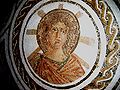 parent of (father) Apollo god in Roman mythology
 -
 parent of (father) Bacchus ancient Roman deity of wine
 -
 parent of (father) Bellona ancient Roman goddess of war, similar to the ancient Greek Enyo
 -
 parent of (father) Diana goddess of the hunt, the moon and birthing, equated with the Greek goddess Artemis
 - parent of (child) Garamantis
-
 parent of (father) Hercules Roman adaptation of the Greek divine hero Heracles
 -
 parent of (child) Iarbas mythical African king
 -
 parent of (father) Iuventas Roman goddess
 -
 parent of (father) Mars Roman god of war, guardian of agriculture
 -
 parent of (father) Mercury Roman god of trade, merchants, thieves and travel
 -
.jpg/120px-Statue_de_la_d%C3%A9esse_Minerve_-_Mus%C3%A9e_du_Louvre_(Ma_332).jpg) parent of (father) Minerva Roman goddess of wisdom and sponsor of arts, trade, and defense
parent of (father) Minerva Roman goddess of wisdom and sponsor of arts, trade, and defense -
.jpg/120px-Statue_of_the_goddess_Pax_(Pavlovsk_Garden%2C_St_Petersburg%2C_Russia).jpg) parent of (father) Pax Roman goddess of peace
parent of (father) Pax Roman goddess of peace -
 parent of (father) Proserpina ancient Roman goddess
 -
 parent of (father) Vulcan god of both beneficial and hindering fire
 - partner of Garamantis
-
 partner of (spouse) Juno ancient Roman goddess
 -
 partner of Juturna goddess of fountains, wells and springs, and the mother of Fontus by Janus
 - partner of Latona mother of Apollo and Diana in Roman mythology
-
.jpg/120px-Ceres_of_M%C3%A9rida_(cropped).jpg) sibling of Ceres Roman goddess of agriculture
sibling of Ceres Roman goddess of agriculture - sibling of Juno ancient Roman goddess
-
 sibling of Neptune Roman god of water, particularly the sea, considered equivalent to the Greek Poseidon
 -
 sibling of Pluto god in Roman religion, Plouton in Greek

Connections
How Jupiter connects
Grouped by the kind of relationship, because a successor is not a son and a shared symbol is not an influence.
Affiliation 1
What this means
Association with a tradition or school. Traditions branch, overlap and re-merge; this is not a clean single-origin tree.
Does not imply a fixed roster · that every account of the tradition knows this figure
Imported from Wikidata unless a tile says otherwise. Nothing here has been read by an editor.
Identification 20
What this means
One figure treated as another in some context. Not literal identity in all contexts, and usually a claim by a third party.
Does not imply literal identity in all contexts · that either tradition made the identification
Imported from Wikidata unless a tile says otherwise. Nothing here has been read by an editor.
- identified with Adceneicus equivalent of Zeus/Iuppiter
- identified with Assaecus Equivalent to Jupiter; possibly a local deity connected to the river Asseca
- identified with Cimistenus equivalent of Zeus/Iuppiter
-
.jpg/120px-Tiruchchirappalli_painting_Indra_(cropped).jpg) identified with Indra Vedic god of rain, weather, storms, and thunder in Hinduism, Buddhism, Jainism, and Eastern religions
identified with Indra Vedic god of rain, weather, storms, and thunder in Hinduism, Buddhism, Jainism, and Eastern religions -
 identified with Jehovah Latinate transliteration of יהוה (YHWH) with the vowel points of Adonai
 - identified with Jupiter classical astrological planet
- identified with Maleciabrudes equivalent of Zeus/Iuppiter
-
 identified with Marduk national god of the Babylonians
 - identified with Nennicus equivalent of Zeus/Iuppiter
Show all 20
-
 identified with Perun Slavic supreme god of the sky and war
 - identified with Shangdi The High God, the supreme or single God of ancient Shenism, some salvationist religions like Yiguandao, and Protestant Christianity in Chinese translation
- identified with Tamitenus Gallic god in Bulgaria equivalent to Jupiter
- identified with Taranis Celtic god of thunder
-
 identified with Tengri chief deity of Turko-Mongolic religion
 -
.png/120px-Thor_(Walhall).png) identified with Thor hammer-wielding Norse god associated with thunder, lightning, storms, oaks, strength, and fertility
identified with Thor hammer-wielding Norse god associated with thunder, lightning, storms, oaks, strength, and fertility -
 identified with Tinia Etruscan god
 - identified with Uxlemitanus Celtic weather god
-
 identified with Vajrapani Mahayana bodhisattva
 -
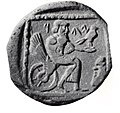 identified with Yahweh national god of ancient Israel and Judah kingdoms, god of monotheistic Judaism and Abrahamic religions
 -
 identified with Zeus Greek god of the sky and king of the gods
Attribute 1
What this means
A domain, symbol or epithet as sources record it.
Does not imply an exclusive domain · the same association in every account
Imported from Wikidata unless a tile says otherwise. Nothing here has been read by an editor.
Sources
Sources and evidence
Where every statement on this page comes from, and how each one stands.
37 statements on this record
- 12 Has references The statement cites something outside Wikimedia. That citation has not been checked here.
- 25 Imported Taken from Wikidata as it stands. Nobody here has read it.
Only this record’s own statements. What other records say about it is counted on theirs.
Three layers, three licences
- Text
- Wikipedia · CC BY-SA 4.0, quoted, not merged
- Pictures
- Wikimedia Commons · each file’s own terms
Review
Not yet read by an editor here. Every relationship on this page is an import.
Disagreements are kept, not resolved, and a count of sources is not a confidence score.


Keep exploring
More from Greek and Roman
The Olympians and their Roman equivalents, the mystery cults, and the poets whose accounts disagree.