

Family
The family of Hephaestus
Parents, consorts and children as the accounts give them. Choose a consort to see the children the stories give the two.
Accounts differ about a god’s family. Where they name different parents, the tree sets them side by side instead of choosing one.
The family as a list · 37
Kinship in an account 31
What this means
Parentage as a named source tells it. Not an independently established biological relationship, and different accounts disagree.
Does not imply an independently established biological relationship · agreement between accounts · marriage as a legal institution · exclusivity, or a single canonical pairing · shared parentage in every account · descent from the same generation in a single tree
Imported from Wikidata unless a tile says otherwise. Nothing here has been read by an editor.
-
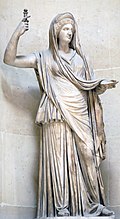 child of (child) Hera Greek goddess, wife and sister of Zeus
 - child of (father) Talus reputed father of Hephaestus
-
 child of (child) Zeus Greek god of the sky and king of the gods
 - parent of (child) Aethiops mythical son of Hephaestus
- parent of (child) Alcon mythological Greek character, son of Hephaestus and Cabeiro
- parent of (child) Ardalus mythical son of Hephaestus
- parent of (child) Broteas son of Vulcan
- parent of (father) Cadmilus Greek divinity associated with the Cabeiroi
-
_06.jpg/120px-Kylix_Ais%C3%B3n_Teseo_(M.A.N._Madrid)_06.jpg) parent of (child) Cercyon of Eleusis son of Branchus in Greek mythology
parent of (child) Cercyon of Eleusis son of Branchus in Greek mythology -
 parent of (child) Erichthonius legendary king of Athens
 - parent of (father) Eucleia Greek mythological figure
- parent of (child) Eupheme Greek female spirit of words of good omen, praise, acclaims, shouts of triumph, and applause
- parent of (father) Eurymedon mythical son of Hephaestus
-
 parent of (father) Euthenia daimona of Ancient Greece, female spirit of prosperity
 - parent of (child) Olenus mythical son of Hephaestus/Vulcan in Greek mythology
- parent of (child) Palaemon Argonaut, son of Hephaestus
- parent of (child) Palici pair of indigenous Sicilian chthonic deities in Greek and Roman mythology
-
 parent of (child) Periphetes mythical son of Hephaestus
 - parent of (father) Philophrosyne daimona in Greek mythology
- parent of (child) Pylios mythical son of Hephaestus
-
 parent of (child) Rhadamanthus Greek mythology character, son of Zeus and Europa
 -
 parent of (father) Thalia nymph, daughter of Hephaestus
 - partner of Aetna Sicilian nymph, connected to Mount Etna
-
 partner of (spouse) Aglaea one of the Graces (Charites) in Greek mythology
Show all 31
- partner of Anticleia Mother of Periphetes
-
 partner of (spouse) Aphrodite Greek goddess of love, beauty, pleasure, and procreation
 -
 partner of Athena goddess of wisdom and war in ancient Greek religion and mythology
 -
 partner of Cabeiro sea nymph in Greek mythology
 - partner of (spouse) Charis Greek goddess, spouse of Hephaestus
-
 partner of Gaia Greek primordial deity, the personification of the Earth
 -
.jpg/120px-%CE%9F_%CE%86%CF%81%CE%B7%CF%82_(Borghese-%CE%9B%CE%BF%CF%8D%CE%B2%CF%81%CE%BF%CF%85).jpg) sibling of Ares Greek god of war and combat
sibling of Ares Greek god of war and combat
Family 6
What this means
A documented human family relationship. Not a succession mechanism, and not religious transmission.
Does not imply a right to an office · transmission of a teaching · a shared religious affiliation
Imported from Wikidata unless a tile says otherwise. Nothing here has been read by an editor.
- parent of (father) Cercyon of Eleusis son of Branchus in Greek mythology
- parent of (father) Erichthonius legendary king of Athens
- parent of (father) Eupheme Greek female spirit of words of good omen, praise, acclaims, shouts of triumph, and applause
- parent of (father) Periphetes mythical son of Hephaestus
- parent of (father) Rhadamanthus Greek mythology character, son of Zeus and Europa
- sibling of Manes king of Maeonia
Accounts
Where Hephaestus appears
Each work is its own account. Where two disagree about a parent or a deed, both readings stand.
What this means
Works this figure is recorded as appearing in. Each is an account, not a chapter of one story: where two of them disagree about a parent or a deed, both readings stand and this site keeps the disagreement. The earliest account below is computed from these works, not stated by any source — a fact about which texts this collection holds and when they were written, not a date for the figure, who has none, and not a floor for the tradition, which is older than anything that survives of it.
-
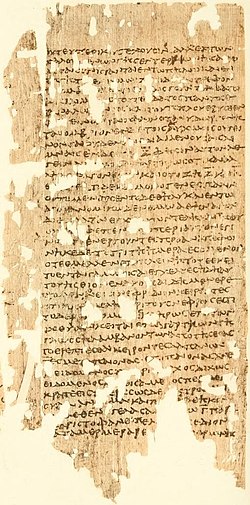 Written 8th century BCE
Iliad
epic poem attributed to Homer -
 No date recorded
Prometheus Bound
ancient Greek tragedy by Aeschylus
The earliest account held here Computed
Iliad written 8th century BCE
A date for the text, never for the deity.Connections
How Hephaestus connects
Grouped by the kind of relationship, because a successor is not a son and a shared symbol is not an influence.
Affiliation 1
What this means
Association with a tradition or school. Traditions branch, overlap and re-merge; this is not a clean single-origin tree.
Does not imply a fixed roster · that every account of the tradition knows this figure
Imported from Wikidata unless a tile says otherwise. Nothing here has been read by an editor.

Identification 5
What this means
One figure treated as another in some context. Not literal identity in all contexts, and usually a claim by a third party.
Does not imply literal identity in all contexts · that either tradition made the identification
Imported from Wikidata unless a tile says otherwise. Nothing here has been read by an editor.


Attribute 3
What this means
A domain, symbol or epithet as sources record it.
Does not imply an exclusive domain · the same association in every account
Imported from Wikidata unless a tile says otherwise. Nothing here has been read by an editor.
Sources
Sources and evidence
Where every statement on this page comes from, and how each one stands.
41 statements on this record
- 8 Has references The statement cites something outside Wikimedia. That citation has not been checked here.
- 33 Imported Taken from Wikidata as it stands. Nobody here has read it. 1 of them cite only Wikipedia: one source, counted once.
Only this record’s own statements. What other records say about it is counted on theirs.
Three layers, three licences
- Text
- Wikipedia · CC BY-SA 4.0, quoted, not merged
- Pictures
- Wikimedia Commons · each file’s own terms
Review
Not yet read by an editor here. Every relationship on this page is an import.
Disagreements are kept, not resolved, and a count of sources is not a confidence score.


Keep exploring
More from Greek and Roman
The Olympians and their Roman equivalents, the mystery cults, and the poets whose accounts disagree.