

Deity Akkadian Empire
Enlil
Ancient Mesopotamian god
- Child of Anu
- Consort of Ninhursag, Suzianna, Damgalnuna and 2 more
A god is known
by the accounts
that name it.
Accounts kept apart
Family
The family of Enlil
Parents, consorts and children as the accounts give them. Choose a consort to see the children the stories give the two.
Accounts differ about a god’s family. Where they name different parents, the tree sets them side by side instead of choosing one.
The family as a list · 17
Kinship in an account 17
What this means
Parentage as a named source tells it. Not an independently established biological relationship, and different accounts disagree.
Does not imply an independently established biological relationship · agreement between accounts · marriage as a legal institution · exclusivity, or a single canonical pairing · shared parentage in every account · descent from the same generation in a single tree
Imported from Wikidata unless a tile says otherwise. Nothing here has been read by an editor.
-
 child of (child) Anu Sumerian deity, Sky Father, King of the Gods
 -
 parent of (father) Adad Mesopotamian deity
 - parent of (father) Lahar Sumerian god
- parent of (father) Namtar Mesopotamian mythical being inhabiting the underworld
-
 parent of (father) Nergal underworld deity worshipped throughout Mesopotamia
 -
 parent of (father) Ninazu Mesopotamian Underworld deity
 -
 parent of (father) Ningirsu deity in Sumerian mythology
 -
 parent of (father) Ninurta mesopotamian deity
 -
 parent of (father) Nusku sumerian deity
 - parent of (father) Pabilsaĝ mesopotamian deity
-
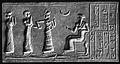 parent of (father) Sin Mesopotamian lunar god
 - partner of (spouse) Damgalnuna mesopotamian goddess
-
 partner of (spouse) Ereshkigal goddess in Mesopotamian mythology
 -
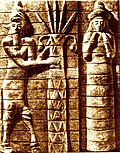 partner of (spouse) Ninhursag sumerian goddess
 -
 partner of (spouse) Ninlil Mesopotamian goddess
 - partner of (spouse) Suzianna mesopotamian goddess
-
 sibling of Enki god in Sumerian mythology; god of ritual wisdom
Connections
How Enlil connects
Grouped by the kind of relationship, because a successor is not a son and a shared symbol is not an influence.
Affiliation 4
What this means
Association with a tradition or school. Traditions branch, overlap and re-merge; this is not a clean single-origin tree.
Does not imply that the culture was religiously uniform
Imported from Wikidata unless a tile says otherwise. Nothing here has been read by an editor.


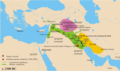
Identification 1
What this means
One figure treated as another in some context. Not literal identity in all contexts, and usually a claim by a third party.
Does not imply literal identity in all contexts · that either tradition made the identification
Imported from Wikidata unless a tile says otherwise. Nothing here has been read by an editor.

Sources
Sources and evidence
Where every statement on this page comes from, and how each one stands.
18 statements on this record
- 4 Has references The statement cites something outside Wikimedia. That citation has not been checked here.
- 14 Imported Taken from Wikidata as it stands. Nobody here has read it. 14 of them cite only Wikipedia: one source, counted once.
Only this record’s own statements. What other records say about it is counted on theirs.
Three layers, three licences
- Text
- Wikipedia · CC BY-SA 4.0, quoted, not merged
- Pictures
- Wikimedia Commons · each file’s own terms
Review
Not yet read by an editor here. Every relationship on this page is an import.
Disagreements are kept, not resolved, and a count of sources is not a confidence score.


Keep exploring
More from Mesopotamia and the Levant
Sumerian, Akkadian, Babylonian, Assyrian, Hittite-adjacent and Canaanite gods, and the texts that carry them.