

Deity Greek and Roman
Boreas
Greek mythological personification and god of the North wind, storms,, winter, loneliness, solitude, absence, lack, sadness, depression, calmness and serenity
A god is known
by the accounts
that name it.
Accounts kept apart
Family
The family of Boreas
Parents, consorts and children as the accounts give them. Choose a consort to see the children the stories give the two.
Accounts differ about a god’s family. Where they name different parents, the tree sets them side by side instead of choosing one.
The family as a list · 23
Kinship in an account 21
What this means
Parentage as a named source tells it. Not an independently established biological relationship, and different accounts disagree.
Does not imply an independently established biological relationship · agreement between accounts · marriage as a legal institution · exclusivity, or a single canonical pairing · shared parentage in every account · descent from the same generation in a single tree
Imported from Wikidata unless a tile says otherwise. Nothing here has been read by an editor.
-
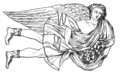 child of (child) Astraeus Greek astrological god associated with winds
 -
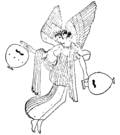 child of (child) Eos Greek goddess of the dawn
 - parent of (father) Aura
- parent of (child) Aurai winged nymphs of the breezes in Greek mythology
- parent of (child) Boreads group of Greek mythical characters, including all descendants of Boreas
- parent of (child) Butes mythical son of Boreas
- parent of (child) Calais mythical son of Boreas
- parent of (child) Chione mythological Greek character, daughter of Boreas
- parent of (child) Cleopatra Greek mythological figure, daughter of Boreas
- parent of (child) Haemus mythical son of Boreas
- parent of (child) Hekaerge Hyperborean maiden
- parent of (child) Hyrpax son of Boreas in Greek mythology
- parent of (child) Loxo daughter of Boreas in Greek mythology
- parent of (child) Zetes son of Boreas in Greek mythology
- partner of Aellopoda one of the Harpies in Greek mythology
- partner of Chione figure in Greek mythology, daughter of Arkturos
- partner of Chloris mother of Hyrpace
-
 partner of (spouse) Orithyia legendary princess of Athens
 -
 sibling of Euros the Greek deity representing the unlucky east wind , autumn, fall of leaves, agriculture, harvest, change , balance , comfort ,adulthood and maturity
 -
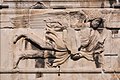 sibling of Notus god of the south wind, storms of late summer and early autumn, wetness, mist, energy, radiance, dryness, freshness, activity, youth and rain in Greek mythology
 -
_-_Flora_And_Zephyr_(1875).jpg/120px-William-Adolphe_Bouguereau_(1825-1905)_-_Flora_And_Zephyr_(1875).jpg) sibling of Zephyrus Greek god of the wind from the west, spring, fertility, procreation, luck, rebirth, vegetation, flowers, bees and honey
sibling of Zephyrus Greek god of the wind from the west, spring, fertility, procreation, luck, rebirth, vegetation, flowers, bees and honey
Family 2
What this means
A documented human family relationship. Not a succession mechanism, and not religious transmission.
Does not imply a right to an office · transmission of a teaching
Imported from Wikidata unless a tile says otherwise. Nothing here has been read by an editor.
Connections
How Boreas connects
Grouped by the kind of relationship, because a successor is not a son and a shared symbol is not an influence.
Identification 1
What this means
One figure treated as another in some context. Not literal identity in all contexts, and usually a claim by a third party.
Does not imply literal identity in all contexts · that either tradition made the identification
Imported from Wikidata unless a tile says otherwise. Nothing here has been read by an editor.
Sources
Sources and evidence
Where every statement on this page comes from, and how each one stands.
22 statements on this record
- 4 Has references The statement cites something outside Wikimedia. That citation has not been checked here.
- 18 Imported Taken from Wikidata as it stands. Nobody here has read it.
Only this record’s own statements. What other records say about it is counted on theirs.
Three layers, three licences
- Text
- Wikipedia · CC BY-SA 4.0, quoted, not merged
- Pictures
- Wikimedia Commons · each file’s own terms
Review
Not yet read by an editor here. Every relationship on this page is an import.
Disagreements are kept, not resolved, and a count of sources is not a confidence score.


Keep exploring
More from Greek and Roman
The Olympians and their Roman equivalents, the mystery cults, and the poets whose accounts disagree.