

Deity Twelve Olympians
Aphrodite
Ἀφροδίτη grc
Greek goddess of love, beauty, pleasure, and procreation
- Child of Zeus, Uranus and Dione
- Consort of Hephaestus, Ares
Beauty
Love
Domains on record
Family
The family of Aphrodite
Parents, consorts and children as the accounts give them. Choose a consort to see the children the stories give the two.
Accounts differ about a god’s family. Where they name different parents, the tree sets them side by side instead of choosing one.
The family as a list · 46
Kinship in an account 38
What this means
Parentage as a named source tells it. Not an independently established biological relationship, and different accounts disagree.
Does not imply an independently established biological relationship · agreement between accounts · marriage as a legal institution · exclusivity, or a single canonical pairing
Imported from Wikidata unless a tile says otherwise. Nothing here has been read by an editor.
-
 child of (child) Dione Greek goddess, mother of Aphrodite
 - child of (child) Evonyme
-
 child of (child) Gaia Greek primordial deity, the personification of the Earth
 -
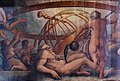 child of (child) Uranus primordial Greek deity, god of the Sky; one of the Greek primordial deities
 -
 child of (child) Zeus Greek god of the sky and king of the gods
 - parent of (mother) Adrestia Greek Goddess of revolt, just retribution and sublime balance between good and evil
-
 parent of (child) Aeneas Trojan hero, son of Anchises and Aphrodite
 -
 parent of (mother) Anteros The God of Selfless Love in Greek mythology
 - parent of (mother) Beroe nymph in Greek mythology
-
 parent of (child) Charites Greek goddesses of grace and beauty
 -
 parent of (mother) Deimos personal god of dread and terror in Greek mythology
 -
 parent of (mother) Eros Greek god of love and sex
 -
 parent of (child) Eryx in Greek mythology, king of the city Eryx in Sicily
 - parent of (child) Golgos minor Greek mythological figure
-
 parent of (mother) Harmonia ancient Greek goddess of harmony and concord, spouse of Cadmus; her opposite is Eris
 -
 parent of (mother) Hermaphroditus son of Aphrodite and Hermes in Greek mythology
 -
 parent of (mother) Himeros son of Ares and Aphrodite, represents sexual desire
 -
 parent of (mother) Hymen Greek god of marriage ceremonies
 - parent of (child) Lyrus mythological Greek character, son of Aphrodite and Anchises
-
 parent of (mother) Peitho personification of Persuasion or winning eloquence in Greek mythology
 -
 parent of (mother) Phobos personification of fear in Greek mythology
 -
 parent of (mother) Phthonus ancient Greek deity personifying jealousy and envy
 - parent of (child) Polycaon son of Butes and Aphrodite
-
 parent of (mother) Pothos Greek divinity, desire/yearning personified
Show all 38
-
 parent of (mother) Priapus ancient Greek deity
 - parent of (mother) Rhodos Goddess of Rhodes in Greek mythology
-
 parent of (mother) Tyche Greek goddess of fortune
 -
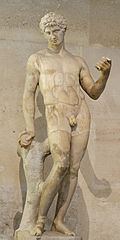 partner of Adonis Greek god of beauty and desire
 -
 partner of Anchises father of Aeneas in Greek mythology, lover of Aphrodite
 -
.jpg/120px-%CE%9F_%CE%86%CF%81%CE%B7%CF%82_(Borghese-%CE%9B%CE%BF%CF%8D%CE%B2%CF%81%CE%BF%CF%85).jpg) partner of Ares Greek god of war and combat
partner of Ares Greek god of war and combat - partner of Butes Argonaut, son of Teleon in Greek Mythology
-
 partner of Dionysus ancient Greek god of winemaking and wine
 -
 partner of (spouse) Hephaestus Greek god of blacksmiths
 -
 partner of Hermes Olympian god in Greek religion and mythology; the emissary and messenger of the gods; the god of trade, heraldry, merchants, commerce, roads, thieves, trickery, sports, travelers, and athletes; the son of Zeus and the Pleiad Maia
 -
.jpg/120px-Palazzo_Comunale%2C_coat_of_arms_(Crespino).jpg) partner of Phaethon son of Helios from Greek mythology
partner of Phaethon son of Helios from Greek mythology - partner of Phaethon son of Eos by Cephalus or Tithonus in Greek mythology
-
 partner of Poseidon one of the twelve Olympians presiding over the sea, storms, earthquakes and horses
 - partner of Zeus Greek god of the sky and king of the gods
Family 8
What this means
A documented human family relationship. Not a succession mechanism, and not religious transmission.
Does not imply a right to an office · transmission of a teaching · a marriage · a shared religious affiliation
Imported from Wikidata unless a tile says otherwise. Nothing here has been read by an editor.
- parent of (mother) Aeneas Trojan hero, son of Anchises and Aphrodite
- parent of (mother) Charites Greek goddesses of grace and beauty
- parent of (mother) Eryx in Greek mythology, king of the city Eryx in Sicily
- parent of (mother) Thestius son of Agenor in Greek mythology
- partner of Anchises father of Aeneas in Greek mythology, lover of Aphrodite
- partner of Butes Argonaut, son of Teleon in Greek Mythology
- partner of Phaethon son of Helios from Greek mythology
- sibling of Manes king of Maeonia
Explained
What somebody has argued about Aphrodite
Written connections, each with its claim, its citations and what it does not show.
Connections
How Aphrodite connects
Grouped by the kind of relationship, because a successor is not a son and a shared symbol is not an influence.
Affiliation 1
What this means
Association with a tradition or school. Traditions branch, overlap and re-merge; this is not a clean single-origin tree.
Does not imply a fixed roster · that every account of the tradition knows this figure
Imported from Wikidata unless a tile says otherwise. Nothing here has been read by an editor.

Identification 5
What this means
One figure treated as another in some context. Not literal identity in all contexts, and usually a claim by a third party.
Does not imply literal identity in all contexts · that either tradition made the identification
Imported from Wikidata unless a tile says otherwise. Nothing here has been read by an editor.
-
 identified with Anahit Armenian Goddess
 -
 identified with Astarte Middle Eastern goddess, worshipped from the Bronze Age through classical antiquity
 - identified with Ba‘alat Gebal Phoenician deity
-
 identified with Turan Etruscan goddess
 -
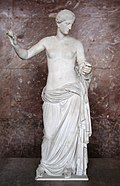 identified with Venus Roman goddess of love, sexuality, procreation and pleasure
Text 1
What this means
A work, its editions and its witnesses are distinct; their dates are not interchangeable.
Does not imply that the work is the only account · that the work is contemporary with what it describes
Imported from Wikidata unless a tile says otherwise. Nothing here has been read by an editor.
Attribute 2
What this means
A domain, symbol or epithet as sources record it.
Does not imply an exclusive domain · the same association in every account
Imported from Wikidata unless a tile says otherwise. Nothing here has been read by an editor.
Sources
Sources and evidence
Where every statement on this page comes from, and how each one stands.
43 statements on this record
- 6 Has references The statement cites something outside Wikimedia. That citation has not been checked here.
- 37 Imported Taken from Wikidata as it stands. Nobody here has read it. 5 of them cite only Wikipedia: one source, counted once.
Only this record’s own statements. What other records say about it is counted on theirs.
Three layers, three licences
- Text
- Wikipedia · CC BY-SA 4.0, quoted, not merged
- Pictures
- Wikimedia Commons · each file’s own terms
Review
Not yet read by an editor here. Every relationship on this page is an import.
Disagreements are kept, not resolved, and a count of sources is not a confidence score.


Keep exploring
More from Greek and Roman
The Olympians and their Roman equivalents, the mystery cults, and the poets whose accounts disagree.