

Deity Norse and Germanic
Ægir
Sea giant, god of the ocean and king of the sea in Norse mythology
A god is known
by the accounts
that name it.
Accounts kept apart
Family
The family of Ægir
Parents, consorts and children as the accounts give them. Choose a consort to see the children the stories give the two.
Accounts differ about a god’s family. Where they name different parents, the tree sets them side by side instead of choosing one.
The family as a list · 14
Kinship in an account 14
What this means
Parentage as a named source tells it. Not an independently established biological relationship, and different accounts disagree.
Does not imply an independently established biological relationship · agreement between accounts · marriage as a legal institution · exclusivity, or a single canonical pairing
Imported from Wikidata unless a tile says otherwise. Nothing here has been read by an editor.
- child of (child) Fornjótr Norse mythical character; giant
- child of (father) Miskorblindi father of Ægir in Norse mythology
- parent of (child) Bára personification of waves in Norse mythology
- parent of (child) Blóðughadda personification of waves in Norse mythology
- parent of (child) Bylgja personification of waves in Norse mythology
- parent of (child) Dúfa one of the Nine Daughters of Ægir and Rán in Norse mythology
- parent of (child) Hefring personification of waves in Norse mythology
- parent of (child) Himinglæva personification of waves in Norse mythology
- parent of (child) Hrönn personification of waves in Norse mythology
- parent of (father) Kólga personification of waves in Norse mythology
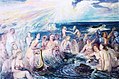
- parent of (child) Nine Daughters of Ægir norse mythological personifications of waves
- parent of (child) Nine Mothers of Heimdallr nine sisters who gave birth to the god Heimdallr
- parent of (child) Unn personification of waves in Norse mythology
-
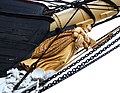 partner of (spouse) Rán Norse deity
Accounts
Where Ægir appears
Each work is its own account. Where two disagree about a parent or a deed, both readings stand.
What this means
Works this figure is recorded as appearing in. Each is an account, not a chapter of one story: where two of them disagree about a parent or a deed, both readings stand and this site keeps the disagreement. The earliest account below is computed from these works, not stated by any source — a fact about which texts this collection holds and when they were written, not a date for the figure, who has none, and not a floor for the tradition, which is older than anything that survives of it.
-
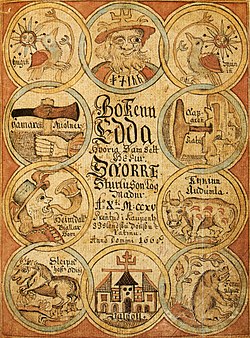 Written 1225 CE
Prose Edda
13th-century Norse work of literature written in Iceland -
 No date recorded
Grímnismál
poem from the Poetic Edda -
 No date recorded
Lokasenna
Old Norse poem from the Poetic Edda -
 Written the 1220s CE
Skáldskaparmál
third part of the Prose Edda - No date recorded
Hymiskviða
OId Norse poem in the Poetic Edda
The earliest account held here Computed
Skáldskaparmál written the 1220s CE
A date for the text, never for the deity.Connections
How Ægir connects
Grouped by the kind of relationship, because a successor is not a son and a shared symbol is not an influence.
Identification 5
What this means
One figure treated as another in some context. Not literal identity in all contexts, and usually a claim by a third party.
Does not imply literal identity in all contexts · that either tradition made the identification
Imported from Wikidata unless a tile says otherwise. Nothing here has been read by an editor.
-
 identified with Ahti water deity of Finnish Folk poetry
 - identified with Gymir Norse mythical character
-
 identified with Neptune Roman god of water, particularly the sea, considered equivalent to the Greek Poseidon
 -
 identified with Poseidon one of the twelve Olympians presiding over the sea, storms, earthquakes and horses
 -
 identified with The Sea Tsar character of Russian folk tales, tutelary deity
Sources
Sources and evidence
Where every statement on this page comes from, and how each one stands.
22 statements on this record
- 19 Has references The statement cites something outside Wikimedia. That citation has not been checked here.
- 3 Imported Taken from Wikidata as it stands. Nobody here has read it.
Only this record’s own statements. What other records say about it is counted on theirs.
Three layers, three licences
- Text
- Wikipedia · CC BY-SA 4.0, quoted, not merged
- Pictures
- Wikimedia Commons · each file’s own terms
Review
Not yet read by an editor here. Every relationship on this page is an import.
Disagreements are kept, not resolved, and a count of sources is not a confidence score.


Keep exploring
More from Norse and Germanic
The Æsir and Vanir as the Eddas tell them, and what the archaeology says instead.