
Explained connection Documented influence
Aphrodite and the Near Eastern love goddesses
A long-standing argument derives Aphrodite partly from Near Eastern goddesses of love and war — Ishtar and Astarte — transmitted through Cyprus and Phoenician contact.

Deity · Twelve Olympians
Greek goddess of love, beauty, pleasure, and procreation
Open the page : Aphrodite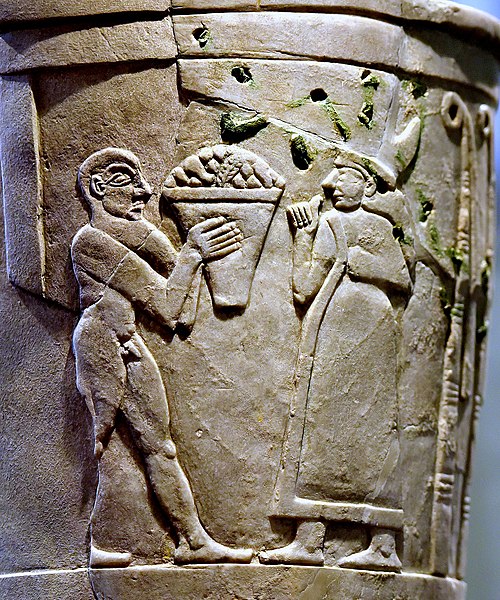
Also in the argument Astarte

What supports it
3 points in its favour
- Her two most-claimed birthplaces, Cythera and Cyprus, are both places of early and sustained Phoenician contact, and both gave her an epithet: Cytherea and Cypris.
- In Laconia she was worshipped as a warrior goddess, which pairs love and war in the way Ishtar and Astarte do and in a way the rest of the Greek pantheon does not.
- Herodotus reports that the sanctuary of Aphrodite Ourania at Ascalon was the oldest of her temples and that the Cyprian one was founded from it — a Greek writer explicitly deriving her cult from the Levant.
What limits it
4 points that limit it
- It is one of at least three live proposals. The others derive her from an indigenous Cypriot goddess and from a Proto-Indo-European dawn goddess, and the question is not settled.
- Shared domains are the weakest kind of evidence: love and war are not a rare pair, and two traditions can arrive at them independently.
- Herodotus is a fifth-century Greek writing about a foreign cult, with a habit of deriving Greek institutions from older eastern ones. His testimony is evidence that Greeks believed this, which is not the same as evidence that it happened.
- This site holds no narrative accounts yet, so none of the above can be attached here to a specific line of a specific work.
Sources
Argued, cited and signed by HistorIQly editorial ·
What this means
Documented influence. A transmission argued from evidence. Not shared symbols, and not a short path through a database. It does not imply shared symbols as evidence, or a short path through a database.
It is not a path through the records. This site can always find a chain of statements between two well-known subjects, and that chain is a fact about this database rather than an argument about history — which is why a computed path is a different type, a different file and a different page from this one.
It is not a verdict either. The limits above are the same size as the support because they are the same kind of thing: reasons, of which some point one way.
Other explained connections.
Each with its own claim, its support and its limits.
- Documented influence Mithraic mysteries was influenced by Zoroastrianism
Roman Mithras and Iranian Mithra
The Roman mysteries of Mithras take their god's name from the Iranian Mithra, and very little else that can be demonstrated. What supports it 2 The name is the same, and Roman writers themselves described the cult as Persian. What limits it 4 Continuity of a name is not continuity of a cult. The Roman Mithras carries a new and distinctive imagery, and how much of the practice is continuous with Persian worship is exactly what remains debated. 2 sources Read the argument - Patronage Ashoka was a patron of Buddhism
Ashoka's patronage and the spread of Buddhism
Ashoka's inscriptions are the best-dated evidence anywhere of a state supporting a religious tradition — and the clearest case of why that is not the same as a population adopting it. What supports it 3 More than thirty inscriptions survive on pillars, boulders and cave walls across what is now India, Bangladesh, Nepal, Afghanistan and Pakistan — the first tangible evidence of Buddhism and the earliest datable written texts from India. What limits it 4 An edict is a proclamation, not a survey. It records what a ruler had carved; it records nothing at all about what anyone believed. 3 sources Read the argument
_and_Cautes_(right)%2C_from_the_Mithraeum_at_Sidon_(Colonia_Aurelia_Pia%2C_Syria)%2C_Louvre_Museum_(9365068428).jpg/330px-Statutory_group_depicting_the_cult_of_Mithras%2C_Mithras_slaying_the_bull_accompagnied_by_his_two_torchbeares_Cautopates_(left)_and_Cautes_(right)%2C_from_the_Mithraeum_at_Sidon_(Colonia_Aurelia_Pia%2C_Syria)%2C_Louvre_Museum_(9365068428).jpg)


Side by side
Aphrodite and Inanna, compared.
What the records hold for both — and what sharing it does not prove.
Similarity is not
proof of origin.