
Tradition collection 45 records
Steppe, Siberia and the Arctic
Tengrism, Scythian religion, Siberian and Sámi tradition.
- Extent Eurasian steppe, Siberia and northern Scandinavia, roughly 800 BCE to the present.
- Holds 27 gods · 6 figures · 6 traditions · 3 texts and stories

Pictures: Wikimedia Commons, credited on each page
Before you count
Much of this is recorded through Chinese, Persian, Russian and missionary observers.
Gods · 27
The gods, and the company they keep
The most widely linked across Wikipedia, this collection’s own first. A picture of a god is a work of art, never a likeness.
-
 TengriChief deity of Turko-Mongolic religion
 -
 ErlikGod of death in Turkic and Mongolic mythology
 -
 BeaiviSami sun-deity, name of sun in Sami
 -
 Snake-Legged GoddessScythian goddess
 -
_2-hryvnia_gold_coin%2C_2008_(obverse).png/330px-Scythian_Gold_(The_Goddess_Api)_2-hryvnia_gold_coin%2C_2008_(obverse).png "Picture: Scythian Gold, coin type") ApiGoddess of the Scythian pantheon
ApiGoddess of the Scythian pantheon
Not its own picture Api — Scythian Gold, coin type
More of its best-linked gods
In company
Pantheons, read from the members’ own records — never from a fixed roster.

Figures · 6
Who to meet first
The figures its own texts, stories and traditions name — the most widely linked first, this collection’s own before those it shares.
-
_Miniature_(Oghuz_Khan_detail).jpg/330px-Ugh%C5%ABz_Kh%C4%81n_receives_a_messenger_from_Damascus_with_a_load_of_bows_W676%2C_Majma'_al-tawarikh_(circa_1425)_Miniature_(Oghuz_Khan_detail).jpg) Oghuz KhaganLegendary khan of the Turkic people, eponymous ancestor of Oghuz Turks
Oghuz KhaganLegendary khan of the Turkic people, eponymous ancestor of Oghuz Turks -
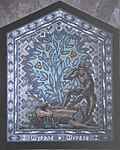
 şüräleForest spirit in Tatar and Bashkir mythology with long fingers, a horn on its forehead, and a woolly body, who lures victims to a thicket and tickles them to death
 -
 Genghis KhanFounder and first khan of the Mongol Empire (1162–1227)
 -
 Chagatai KhanSecond son of Genghis Khan and Börte (1183–1242)
 -
 Álmos, Grand Prince of the MagyarsKende or gyula of the Hungarians (fl. 9. century)
More of its best-linked figures
Traditions · 6
Many paths, shared histories
The traditions, schools and movements this collection holds — each with its own page.
-
Tengrism
Original religion of the Turkic and Mongolic peoples -
Sami religion
Traditional religion of the Sami people in the Nordic countries -
Mongolian shamanism
Animistic and shamanic religion practiced in Mongolia -
Scythian religion
Ancient religion of the Scythians -
Vattisen Yaly
Ethnic religion of the Chuvash people -
Tengir Ordo
Tengrist movement in Kyrgyzstan
Texts and stories · 3
Stories and texts
What was told, and what was written — dated when it was written.

Also here · 2
Also in this collection
Kinds it holds only one or two of, each with its own page.

%2C_with_natural_colorization.png/120px-Timur_forensic_reconstruction_(Gerasimov%2C_1941)%2C_with_natural_colorization.png)
What this collection holds
Counted, not scored. Each count opens its list.
A record can be more than one kind — a monastery is a place and an institution — so these counts add up to more than its 45 records. The sections above count the same way, and draw each record once, under the kind its own page is filed under.
- Statements
- 157
- With references
- 21
- Undated
- 39
- Accounts
- 0
- Reviewed here
- 0
What it is missing, and how it was assembled
What this collection is missing
Written by an editor, not computed. A count of records cannot say any of this, and a collection read without it is a collection read wrongly.
- Much of this is recorded through Chinese, Persian, Russian and missionary observers.
- 'Shamanism' is a category imposed from outside and is used here only where a source uses it.
- Living practice is under-recorded relative to the historical material.
Counted across the collections
Festivals, practices and events follow how densely Wikidata records them, not how much a tradition keeps: 77% of the 845 held across the collections are Christian, and this collection holds none.
What the counts mean
- Statements
- Relationships and facts recorded on these records.
- With references
- Statements that cite a source outside Wikimedia.
- Undated
- Records with no date on any of the three clocks.
- Accounts
- Named versions of a story, kept apart.
- Reviewed here
- Read by a person and signed with a date.
How it was assembled
Discovered from Wikidata by class and by religion, ranked by incoming links, then filtered against each item’s own claims. Relationships are imported statements unless a row says otherwise; none of them has been read here.
“Reviewed” means a person read it and signed it with a date — which is why it is zero. Nothing here measures how good the material is.
Records here have an article in 16 languages between them. The interface is English only for now. Published 2026-09-25.