
.jpeg/960px-UgrataraTemple2_(cropped).jpeg)
Tradition collection 1,718 records
South Asian traditions
Hinduism and its schools, Jainism, Sikhism, and the Vedic material behind them.
- Extent Indian subcontinent and its diaspora, roughly 1500 BCE to the present.
- Holds 981 places · 387 gods · 167 figures · 72 texts and stories
Before you count
Hinduism is not one tradition, and a single 'Hinduism' affiliation row on a deity says much less than it appears to.
Places · 981
Holy places and sites
Temples, tombs, holy cities and sites recorded in this collection, the most widely linked first. A place is not a count of believers.
-

Angkor Wat
Hindu-Buddhist temple complex in Cambodia -

Varanasi
City on the banks of the Ganges in the Uttar Pradesh state of India -

Amritsar
City in the north-western part of Punjab, India -

Mount Kailash
Mountain in Tibet, China -
.jpg/330px-Hamandir_Sahib_(Golden_Temple).jpg)
Harmandir Sahib
Sikh religious site in Amritsar, Punjab, India -

Mathura
City in Uttar Pradesh, India -

Ayodhya
City in Uttar Pradesh, India -

Puri
City in Odisha, India -

Prambanan Temple
Hindu temple in Yogyakarta and Central Java, Indonesia
981 places 980 with a point on the map 110 with a date 1 archaeological site
See them on the atlasThe oldest on record
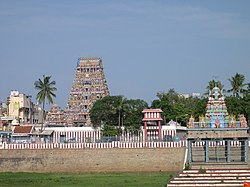
The earliest recorded starts among its best-known places, by 1000 CE, in date order. Each date is the place’s own — a city’s founding, a building’s — not the start of this tradition there.


.jpg/250px-CinqRathaGeneral_(7).jpg)


Where they gather
Cities and sites with two or more of its places recorded in them — counted from each place’s own location.
Gods · 387
The gods, and the company they keep
The most widely linked across Wikipedia, this collection’s own first. A picture of a god is a work of art, never a likeness.
-
 ShivaOne of the principal deities of Hinduism, the Supreme Being in Shaivism and transformer within the Trimurti
 -
 VishnuOne of the principal deities of Hinduism
 -
 KrishnaMajor deity in Hinduism, worshipped as the eighth avatar of Vishnu and also as the Supreme god in his own right
 -
 BrahmaCreator god in Hinduism
 -
 GaneshaGod of good luck, prosperity and well being in Hinduism; First worshipped God; Son of Shiva and Parvati
 -
.jpg/330px-Tiruchchirappalli_painting_Indra_(cropped).jpg) IndraVedic god of rain, weather, storms, and thunder in Hinduism, Buddhism, Jainism, and Eastern religions
IndraVedic god of rain, weather, storms, and thunder in Hinduism, Buddhism, Jainism, and Eastern religions -
 KālīHindu goddess associated with death and destruction, in the 21st century adopted as symbol of feminine empowerment
 -
 LakshmiHindu goddess of wealth, love, prosperity
 -
 SaraswatiPrincipal Hindu goddess, goddess of knowledge, music and speech
 -
 Hanuman11th incarnation of God, Great devotee of Rama, Hindu God of strength, learning, and devotion
 -
 ParvatiHindu goddess of fertility, motherly love and devotion
 -
 DurgaWarrior goddess of Hinduism
In company
Pantheons, read from the members’ own records — never from a fixed roster.
Navagraha 9 members on record Explore the pantheon
-
 SuryaSolar god in Hinduism
 -
 ChandraLunar god in Hinduism
 -
 BrihaspatiVedic sage, alternatively the Indic name of planet Jupiter, also a Hindu deity
 -
 ŚaniPlanet Saturn, also a Hindu deity
 -
 RahuHindu deity representing ascending lunar node
 -
 ShukraPlanet Venus, also a Hindu deity
 -
 BudhaPlanet Mercury, also a Hindu deity
 -
 KetuHindu deity representing descending lunar node
 -
 MangalaPlanet Mars, also a Hindu deity

.jpg/250px-Twelve_Deva_Mandala_(Kokubunji_Shimonoseki).jpg)


.jpg/120px-GuruTara_(Restored).jpg)

.jpeg/250px-UgrataraTemple2_(cropped).jpeg)


Figures · 167
Who to meet first
The figures its own texts, stories and traditions name — the most widely linked first, this collection’s own before those it shares.
-
 Swami VivekanandaIndian Hindu monk and philosopher (1863–1902)
 -
 RamaGreatest and seventh incarnation of God, hero of the Ramayana, protector of Dharma
 -
 Guru NanakFirst Sikh Guru and founder of Sikhism
 -
 MahaviraIndian religious leader
 -
 ArjunaCentral character of Indian epic Mahabharata
 -
 Chaitanya Mahaprabhu15th century Indian Vaishnavite saint
 -
 RāvaṇaKing of Lankā in the Hindu epic Ramayana
 -
 DraupadīMain female character in the Hindu epic Mahabharata
 -
 Madhvacharya13th-century Hindu Dvaita philosopher
 -
 ParashuramaSixth avatar of Hindu god Vishnu
 -
 BhīmaGreat Kshatriya(Rajput) warrior of Mahabharata
 -
 LakshmanaAn incarnation of Sheshnaga, The younger and most beloved brother of Lord Rama
Not its own picture Madhvacharya — lead image of the English Wikipedia article
Texts and stories · 72
Stories and texts
What was told, and what was written — dated when it was written.
-
 Text
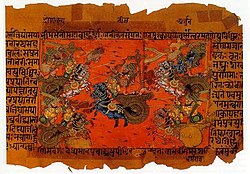
TextMahabharata
Ancient Sanskrit epic by Vyasa -
 Text
TextRamayana
An ancient Hindu epic composed by Valmiki which narrates the life story of Lord Rama. -
 Text
TextVedas
Ancient sacred scriptures revealed in Sanskrit to Richi sages and on which Brahmanism, Hinduism, Buddhism and Jainism were based - Text
Rigveda
Most ancient Veda of the Hindus -
 Text
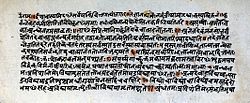
TextUpanishads
Ancient Sanskrit religious and philosophical texts of Hinduism -
 Text
TextGuru Granth Sahib
The primary holy scripture of Sikhism
Traditions · 62
Many paths, shared histories
The traditions, schools and movements this collection holds — each with its own page.
-

Hinduism
Religion widely practiced in the Indian subcontinent -
_in_Amritsar%2C_India.jpg/250px-Sikh_pilgrim_at_the_Golden_Temple_(Harmandir_Sahib)_in_Amritsar%2C_India.jpg)
Sikhism
Monotheistic Indian religion -

Jainism
Indian religion -
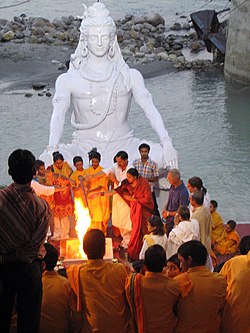
Shaivism
Major tradition of Hinduism that reveres Shiva as the Supreme Being -

Vaishnavism
Major Hindu tradition that reveres Vishnu as the Supreme Being -

Ramakrishna Math
Religious organizational movement related to Indian saint Ramakrishna Paramahamsa -
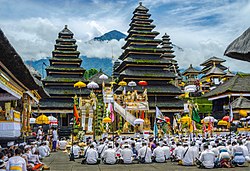
Balinese Hinduism
Form of Hinduism practiced in Bali -

Nath
Yogi-based Shaivism tradition (Hinduism)
Festivals and practices · 46
Festivals, holy days and practices
Holy days with the day their record gives, then rites and practices. A festival recurs, so it has no date on the historical clock.
Holy days and festivals · 7, each with the day its record gives
-
 Observed on Ashvin Shukla Pratipada and 9 other days
Durga Puja
Hindu festival in Indian subcontinent -
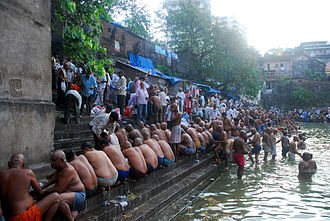 Observed on Bhadra Purnima and 15 other days
Pitru Paksha
Ancestral Worship from Hindu religion -
.jpg/330px-Tihar_Celebration_in_Nepal_(Brother_and_Sister).jpg) Observed on Kartik Shukla Dwitiya
Observed on Kartik Shukla DwitiyaBhai Dooj
Festival celebrated by Hindus -
 Observed on January 13
Bhogi
First day of the South Indian festival Pongal
3 more with a recorded day — the full list.
Rites and practices · 36, with no day on record
-

Kumbh Mela
Hindu pilgrimage and festival celebrated in India -

Advaita Vedanta
School of Hindu philosophy; a classic path to spiritual realization -

puja
Prayer ritual performed by Hindus of devotional worship -

Pongal
Multi-day annual harvest Tamils festival in South India and Sri Lanka various region -

Makar Sankranti
Hindu festival that reveres Surya (sun god) -

Upanayana
Hindu rite of passage when a student enters a school, particularly Vedic school
30 more — the full list.
Festivals, practices and events follow how densely Wikidata records them, not how much a tradition keeps: 77% of the 845 held across the collections are Christian, and this collection holds 47.
Institutions, offices and houses · 53
Institutions, offices and houses
Recorded in this collection, the most widely linked first. An office is a line of holders, not a family. A ruling house’s affiliation is the family’s, not its subjects’ practice.
-
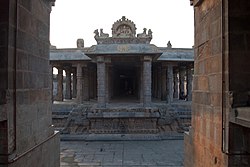 House
HouseChola dynasty
Dynasty of southern India -
 Institution
International Society for Krishna Consciousness
Religious organisation -
 House
HouseChalukya dynasty
Classical Indian dynasty (543–753) -
 House
HouseChandelas of Jejakabhukti
Mediaeval Indian dynasty -
 Institution
Bagalāmukhī
Religious organization - House
Dar Raj
Royal family and Jagirdari estate
Also here · 1
Also in this collection
Kinds it holds only one or two of, each with its own page.

What this collection holds
Counted, not scored. Each count opens its list.
A record can be more than one kind — a monastery is a place and an institution — so these counts add up to more than its 1,718 records. The sections above count the same way, and draw each record once, under the kind its own page is filed under.
- Statements
- 3,193
- With references
- 378
- Undated
- 1,505
- Accounts
- 0
- Reviewed here
- 0
What it is missing, and how it was assembled
What this collection is missing
Written by an editor, not computed. A count of records cannot say any of this, and a collection read without it is a collection read wrongly.
- Hinduism is not one tradition, and a single 'Hinduism' affiliation row on a deity says much less than it appears to.
- Regional and household deities vastly outnumber the recorded ones.
- Puranic genealogies differ between Puranas; where a relationship is drawn without an account, that is what the label says.
Counted across the collections
Festivals, practices and events follow how densely Wikidata records them, not how much a tradition keeps: 77% of the 845 held across the collections are Christian, and this collection holds 47.
What the counts mean
- Statements
- Relationships and facts recorded on these records.
- With references
- Statements that cite a source outside Wikimedia.
- Undated
- Records with no date on any of the three clocks.
- Accounts
- Named versions of a story, kept apart.
- Reviewed here
- Read by a person and signed with a date.
How it was assembled
Discovered from Wikidata by class and by religion, ranked by incoming links, then filtered against each item’s own claims. Relationships are imported statements unless a row says otherwise; none of them has been read here.
“Reviewed” means a person read it and signed it with a date — which is why it is zero. Nothing here measures how good the material is.
Records here have an article in 16 languages between them. The interface is English only for now. Published 2026-09-25.
How 49 of these records were placed here through another record
Most records are in South Asian traditions by their own statements. These are here because of another record they are linked to — worked out when the data was built, not stated on the record itself. Each one’s own page says the same.
Cities and sites, through the places recorded in them · 8
- Varanasi — 2 of the 4 places recorded in it here are in this collection
- Amritsar — 4 of the 4 places recorded in it here are in this collection
- Angkor — 2 of the 7 places recorded in it here are in this collection
- Mathura — 3 of the 3 places recorded in it here are in this collection
- Ayodhya — 2 of the 4 places recorded in it here are in this collection
- Puri — 1 of the 1 places recorded in it here are in this collection
and 2 more
Places, through the god they are dedicated to · 4
- Somnath temple — it is dedicated to Shiva
- Birla Mandir — it is dedicated to Lakshmi
- Kheer Bhawani — it is dedicated to Bhavānī
- Kainchi Dham — it is dedicated to Hanuman
Figures and stories, through the text they appear in · 28
- Arjuna — it appears in Mahabharata
- Bhīma — it appears in Mahabharata
- Bhīṣma — it appears in Mahabharata
- Karṇa — it appears in Mahabharata
- Kuntī — it appears in Mahabharata
- Pāṇḍu — it appears in Mahabharata
and 22 more
Parts, through the whole they belong to · 2
- Mandala 10 — it is part of Rigveda
- Kannaki Amman — it is part of Kannagi
Practices, through the kind they are · 2
- Durga Puja — it is a kind of puja
- Shakta Rash — it is a kind of puja
Pantheons, through their own published gods · 5
- Mahavidya — 8 of its 9 published gods are in this collection
- Navagraha — 9 of its 9 published gods are in this collection
- Four Heavenly Kings — 5 of its 5 published gods are in this collection
- Twelve Devas — 10 of its 10 published gods are in this collection
- Goddesses of Songkran — 4 of its 6 published gods are in this collection


Keep going
Walk South Asian traditions another way.
A family tree as the accounts give it, every mapped place on the atlas, and the dates on the timeline — each on its own clock.