

Tradition collection 212 records
Norse and Germanic
The Æsir and Vanir as the Eddas tell them, and what the archaeology says instead.
- Extent Scandinavia, the North Sea and the Germanic-speaking world, roughly 500 BCE to 1200 CE.
- Holds 103 gods · 60 figures · 39 texts and stories · 4 traditions
Before you count
Almost everything written down is 13th-century Icelandic, which is five hundred years after the practice it describes; the source clock says so.
Gods · 103
The gods, and the company they keep
The most widely linked across Wikipedia, this collection’s own first. A picture of a god is a work of art, never a likeness.
-
.png/330px-Thor_(Walhall).png) ThorHammer-wielding Norse god associated with thunder, lightning, storms, oaks, strength, and fertility
ThorHammer-wielding Norse god associated with thunder, lightning, storms, oaks, strength, and fertility -
 OdinWidely attested deity in Norse mythology
 -
 FreyjaGoddess associated with love, beauty, fertility, sex, war, gold, and seiðr in Norse mythology
 -
 LokiNorse god of mischief, trickery, and deception
 -
_-_Nationalmuseum_-_18255.tif/lossy-page1-330px-Valkyrie_(Peter_Nicolai_Arbo)_-_Nationalmuseum_-_18255.tif.jpg) valkyrieOne of a host of female figures who decide which soldiers die in battle and which live
valkyrieOne of a host of female figures who decide which soldiers die in battle and which live -
 FriggNorse deity
 -
 BaldurNorse god associated with light, beauty, love and happiness
 -
_tecknad.jpg/330px-Tyr-brakteaten_fr%C3%A5n_Naglum%2C_Trollh%C3%A4ttan_(SHM_1164)_tecknad.jpg) TyrGermanic deity
TyrGermanic deity -
 HelGoddess of the underworld in Norse mythology
 -
 HeimdallWatchman of the gods, and the guardian of the gods' stronghold in Norse mythology
 -
 NjordOne of the Vanir, a group of gods within Norse mythology
 -
 FreyrNorse god associated with kingship, fertility, peace, prosperity, fair weather, and good harvest
In company
Pantheons, read from the members’ own records — never from a fixed roster.
Norse mythology 131 members on record Explore the pantheon
-
 BragiSkaldic god of poetry in Norse mythology
 -
 ForsetiNorse god of peace, truth, and justice
 -
 HöðrNorse deity
 -
 IðunnNorse goddess
 -
 UllNorse deity
 -
 VíðarrNorse deity
 -
 MímirNorse god of wisdom
 -
 SkaðiNorse deity
 -
 HœnirNorse deity
 -
 SólNorse deity
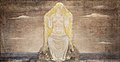
Not its own picture Hœnir — lead image of the French Wikipedia article

.jpg/250px-Bronzestatue_%E2%80%9EChrist_or_Thor%E2%80%9C_aus_dem_isl%C3%A4ndischen_Nationalmuseum_(cropped).jpg)



Figures · 60
Who to meet first
The figures its own texts, stories and traditions name — the most widely linked first, this collection’s own before those it shares.
-
 FenrirMonstrous wolf in Norse mythology
 -
 JörmungandrWorld Serpent in Norse mythology
 -
 SifNorse goddess, wife of Thor
 -
 SurtrNorse mythical character
 -
 BúriNorse mythical character
 -
 NóttNorse mythical character
 -
 ÞrúðrThor's daughter in Norse mythology
 -
 AslaugFigure in Norse mythology, the third wife of Ragnar Lodbrok
 -
 DagrDeity
 -
 HymirNorse giant
 -
 Wayland the SmithGermanic mythological blacksmith
 -
 SuttungrNorse mythical character
Texts and stories · 39
Stories and texts
What was told, and what was written — dated when it was written.
-
 Text
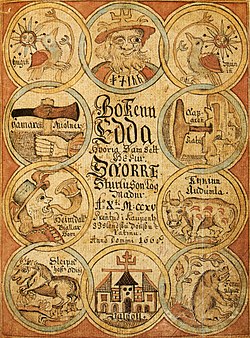
TextProse Edda
13th-century Norse work of literature written in Iceland -
_V%C3%B6lusp%C3%A1_sid1.jpg/250px-Afzelius_Edda_S%C3%A6mundar_(1818)_V%C3%B6lusp%C3%A1_sid1.jpg) Text
TextVöluspá
Poem from the Poetic Edda -
 Story
StoryAskr and Embla
First two humans, created by the gods in Norse mythology from trees -
 Text
TextHávamál
Poem in the Poetic Edda -
 Text
TextGrímnismál
Poem from the Poetic Edda -
 Story
StoryLokasenna
Old Norse poem from the Poetic Edda
Traditions · 4
Many paths, shared histories
The traditions, schools and movements this collection holds — each with its own page.
-
Old Norse religion
Historical religious tradition practiced by North Germanic peoples -
Germanic paganism
Ethnic religion practiced by the Germanic peoples from the Iron Age until Christianisation -
Anglo-Saxon paganism
Polytheistic religious beliefs and practices of the Anglo-Saxons -
Frankish paganism
Polytheistic religious beliefs and practices of the Franks
Also here · 1
Also in this collection
Kinds it holds only one or two of, each with its own page.
What this collection holds
Counted, not scored. Each count opens its list.
A record can be more than one kind — a monastery is a place and an institution — so these counts add up to more than its 212 records. The sections above count the same way, and draw each record once, under the kind its own page is filed under.
- Statements
- 1,124
- With references
- 547
- Undated
- 192
- Accounts
- 0
- Reviewed here
- 0
What it is missing, and how it was assembled
What this collection is missing
Written by an editor, not computed. A count of records cannot say any of this, and a collection read without it is a collection read wrongly.
- Almost everything written down is 13th-century Icelandic, which is five hundred years after the practice it describes; the source clock says so.
- Continental Germanic religion is recorded through Roman and Christian observers, and both had an argument to make.
- Sacred sites are largely reconstructed from place names, which is a different kind of evidence from a standing building.
Counted across the collections
Festivals, practices and events follow how densely Wikidata records them, not how much a tradition keeps: 77% of the 845 held across the collections are Christian, and this collection holds 1.
What the counts mean
- Statements
- Relationships and facts recorded on these records.
- With references
- Statements that cite a source outside Wikimedia.
- Undated
- Records with no date on any of the three clocks.
- Accounts
- Named versions of a story, kept apart.
- Reviewed here
- Read by a person and signed with a date.
How it was assembled
Discovered from Wikidata by class and by religion, ranked by incoming links, then filtered against each item’s own claims. Relationships are imported statements unless a row says otherwise; none of them has been read here.
“Reviewed” means a person read it and signed it with a date — which is why it is zero. Nothing here measures how good the material is.
Records here have an article in 16 languages between them. The interface is English only for now. Published 2026-09-25.
How 5 of these records were placed here through another record
Most records are in Norse and Germanic by their own statements. These are here because of another record they are linked to — worked out when the data was built, not stated on the record itself. Each one’s own page says the same.
Figures and stories, through the text they appear in · 2
- Þjazi — it appears in Hárbarðsljóð
- Dietrich of Bern — it appears in Guðrúnarkviða III
Works, through their main subject · 3
- Poetic Edda — its main subject is Norse mythology
- Prose Edda — its main subject is Norse mythology
- Skáldskaparmál — its main subject is Norse mythology