

Tradition collection 94 records
Iranian traditions
Zoroastrianism, the Mithraic mysteries, Manichaeism, Yazidism and the Mandaeans.
- Extent Iranian plateau, Mesopotamia and the Roman frontier, roughly 1500 BCE to the present.
- Holds 26 gods · 24 places · 23 figures · 12 texts and stories
Before you count
The Mithraic mysteries left almost no text and a great deal of iconography; the relationships here lean on the second.
Gods · 26
The gods
The most widely linked across Wikipedia, this collection’s own first. A picture of a god is a work of art, never a likeness.
-
 Ahura MazdaHighest deity and creator deity of Zoroastrianism
 -
.jpg/330px-Ahrimane_(Mythologie_pittoresque%2C_pl._18).jpg) Angra MainyuPersonification of the "destructive spirit" in Zoroastrianism
Angra MainyuPersonification of the "destructive spirit" in Zoroastrianism -
.jpg/330px-Taq-e_Bostan_-_High-relief_of_Anahita%2C_Khosro_II%2C_Ahura_Mazda_(cropped1).jpg) AnahitaIranian goddess
AnahitaIranian goddess -
.png/330px-Page_223_of_Fairy_tales_from_Hans_Christian_Andersen_(Walker).png) Azhi DahakaMythical creature, a dragon div of Persian myth
Azhi DahakaMythical creature, a dragon div of Persian myth -
 Jesus in ManichaeismJesus considered to be one of the primary prophets and a redeeming and suffering cosmic figure in Manichaeism
 -
 Father of GreatnessEternal divine manifestation of good in Manichaeism
Places · 24
Holy places and sites
Temples, tombs, holy cities and sites recorded in this collection, the most widely linked first. A place is not a count of believers.
-
.jpg/500px-Takhte_Soleyman_(5).jpg)
Takht-e Soleyman
Archaeological site in Takab County, Iranian national heritage site -
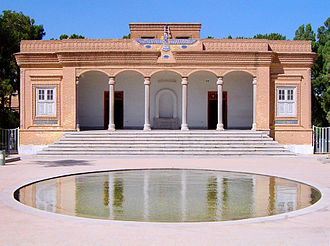
Yazd Fire Temple
Fire temple in Yazd, Iranian national heritage site -

Quba Mere Diwane
Yazidi Temple -

Atashgah of Tbilisi
Also known as Fire Temple of Tbilisi, is a museum now in Tbilisi Georgia -

Tappeh Mill
Mound with fire temple in Ray County, Iranian national heritage site -
.jpg/330px-Atashgah-Esfahan_(1).jpg)
Marbin Fortress
Fortress in Isfahan, Iranian national heritage site -

Adur Gushnasp
Fire temple in Takht-e Soleyman, major Zoroastrian sacred fire -

Nava Vihara
Buddhist stupa or monastery near the ancient city of Balkh -

Cao'an
Manichean temple in Fujian province, China
24 places 24 with a point on the map 10 with a date
See them on the atlasThe oldest on record
The earliest recorded starts among its best-known places, by 1000 CE, in date order. Each date is the place’s own — a city’s founding, a building’s — not the start of this tradition there.
.jpg/250px-Atashgah-Esfahan_(1).jpg)
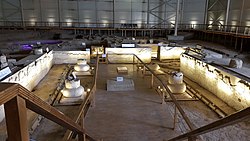
.jpg/250px-London_Mithraeum%2C_Bloomberg%E2%80%99s_European_headquarters%2C_London_(25502116578).jpg)

Figures · 23
Who to meet first
The figures its own texts, stories and traditions name — the most widely linked first, this collection’s own before those it shares.
-
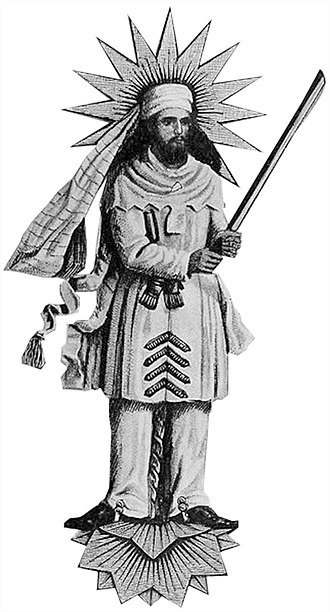 ZoroasterFounder of Zoroastrianism
 -
 Mani3rd century prophet and founder of Manichaeism
 -
 MelchiorOne of the Biblical Magi; in 16th-century paintings generally portrayed as an old man with white hair kneeling at the feet of the Madonna & Child
 -
 GilgameshSumerian ruler and protagonist of the Epic of Gilgamesh
 -
.jpg/330px-God_took_Enoch_(5752456).jpg) EnochBiblical figure, son of Jared
EnochBiblical figure, son of Jared -
 EnochBiblical figure, son of Cain
 -
 Adi ibn MusafirYazidi saint
 -
 Cautes and CautopatesTorch-bearers depicted attending the god Mithras in the icons of ancient Roman cult of Mithraism
 -
 Cyrus the GreatFounder of the Achaemenid Empire (559–529 BC)
 -
 Darius IThe fourth and greatest Achaemenid emperor (522–486 BC)
 -
.JPG/330px-National_Museum_of_Iran_Darafsh_(784).JPG) Xerxes IFifth Achaemenid emperor (486–465 BC)
Xerxes IFifth Achaemenid emperor (486–465 BC) -
 Cambyses IIThe second Achaemenid emperor (530–522 BC)
More of its best-linked figures
Texts and stories · 12
Stories and texts
What was told, and what was written — dated when it was written.
-
 Text
TextAvesta
Zoroastrian compendium of sacred literature -
 Text
TextYasna
Primary liturgical collection of Zoroastrian texts, and principal act of worship in Zoroastrianism -
 Text
TextVendidad
Zoroastrian priestly code and Avestan text -
 Text
TextShabuhragan
Sacred book of the Manichaean religion, written by the founder Mani - Text
Gospel of Mani
3rd-century gnostic gospel written by Mani - Story
Mashya and Mashyana
The first man and woman in Zoroastrian cosmogony
Traditions · 9
Many paths, shared histories
The traditions, schools and movements this collection holds — each with its own page.
-

Zoroastrianism
Iranian religion founded by Zoroaster -
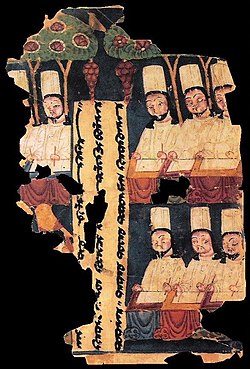
Manichaeism
Persian religion -

Yarsanism
Religion founded by Sultan Sahak in the late 14th century -

Yazidism
Ancient monoteistic religion -
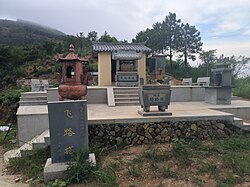
Flying Road Pagoda
Manichaean building in Xiapu County, Fujian Province, China -
_and_Cautes_(right)%2C_from_the_Mithraeum_at_Sidon_(Colonia_Aurelia_Pia%2C_Syria)%2C_Louvre_Museum_(9365068428).jpg/250px-Statutory_group_depicting_the_cult_of_Mithras%2C_Mithras_slaying_the_bull_accompagnied_by_his_two_torchbeares_Cautopates_(left)_and_Cautes_(right)%2C_from_the_Mithraeum_at_Sidon_(Colonia_Aurelia_Pia%2C_Syria)%2C_Louvre_Museum_(9365068428).jpg)
Mithraic mysteries
Ancient Iranian religion in Iran and Roman Empire -
Mandaeism
Monotheistic Abrahamic religion -
Zurvanism
Extinct branch of Zoroastrianism
Also here · 2
Also in this collection
Kinds it holds only one or two of, each with its own page.

Argued, cited and signed
Explained connections that reach into it: a claim, its evidence, its limits.
What this collection holds
Counted, not scored. Each count opens its list.
A record can be more than one kind — a monastery is a place and an institution — so these counts add up to more than its 94 records. The sections above count the same way, and draw each record once, under the kind its own page is filed under.
- Statements
- 384
- With references
- 57
- Undated
- 58
- Accounts
- 0
- Reviewed here
- 0
What it is missing, and how it was assembled
What this collection is missing
Written by an editor, not computed. A count of records cannot say any of this, and a collection read without it is a collection read wrongly.
- The Mithraic mysteries left almost no text and a great deal of iconography; the relationships here lean on the second.
- Living traditions in this group are small and under-recorded on Wikidata relative to their age.
- Avestan chronology is disputed by centuries, and this site keeps the dispute rather than choosing.
Counted across the collections
Festivals, practices and events follow how densely Wikidata records them, not how much a tradition keeps: 77% of the 845 held across the collections are Christian, and this collection holds 2.
What the counts mean
- Statements
- Relationships and facts recorded on these records.
- With references
- Statements that cite a source outside Wikimedia.
- Undated
- Records with no date on any of the three clocks.
- Accounts
- Named versions of a story, kept apart.
- Reviewed here
- Read by a person and signed with a date.
How it was assembled
Discovered from Wikidata by class and by religion, ranked by incoming links, then filtered against each item’s own claims. Relationships are imported statements unless a row says otherwise; none of them has been read here.
“Reviewed” means a person read it and signed it with a date — which is why it is zero. Nothing here measures how good the material is.
Records here have an article in 16 languages between them. The interface is English only for now. Published 2026-09-25.
How 5 of these records were placed here through another record
Most records are in Iranian traditions by their own statements. These are here because of another record they are linked to — worked out when the data was built, not stated on the record itself. Each one’s own page says the same.
Cities and sites, through the places recorded in them · 1
- Takht-e Soleyman — 1 of the 1 places recorded in it here are in this collection
Figures and stories, through the text they appear in · 3
Works, through their main subject · 1
- Sad-dar — its main subject is Zoroastrianism
_11.jpg/960px-Nekresi_(Archaeological_site)_11.jpg)
_11.jpg)
Keep going
Walk Iranian traditions another way.
A family tree as the accounts give it, every mapped place on the atlas, and the dates on the timeline — each on its own clock.