

Tradition collection 2,123 records
Greek and Roman
The Olympians and their Roman equivalents, the mystery cults, and the poets whose accounts disagree.
- Extent Aegean, Italy and the Roman provinces, roughly 1600 BCE to 400 CE.
- Holds 1,086 gods · 578 figures · 311 places · 92 texts and stories
Before you count
Local cults are thin: Wikidata records the Panhellenic gods far better than the deity of a single Arcadian valley.
Gods · 1,086
The gods, and the company they keep
The most widely linked across Wikipedia, this collection’s own first. A picture of a god is a work of art, never a likeness.
-
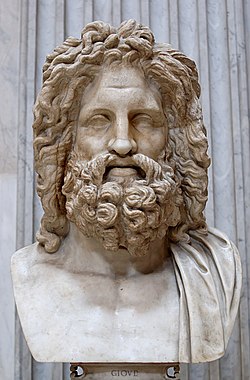
 ZeusGreek god of the sky and king of the gods
 -
 AthenaGoddess of wisdom and war in ancient Greek religion and mythology
 -
 AphroditeGreek goddess of love, beauty, pleasure, and procreation
 -
 ApolloGod in Greek and later Roman mythology
 -
.png/330px-Artemis%2C_Diana_(Museum_Capitolinum).png) ArtemisGoddess of the hunt and the wild in ancient Greek religion and mythology
ArtemisGoddess of the hunt and the wild in ancient Greek religion and mythology -
 VenusRoman goddess of love, sexuality, procreation and pleasure
 -
 PoseidonOne of the twelve Olympians presiding over the sea, storms, earthquakes and horses
 -
 HermesOlympian god in Greek religion and mythology; the emissary and messenger of the gods; the god of trade, heraldry, merchants, commerce, roads, thieves, trickery, sports, travelers, and athletes; the son of Zeus and the Pleiad Maia
 -
.JPG/330px-0_Jupiter_-_Louvre_MR_254_-_Louvre-Lens_(2).JPG) JupiterChief deity of Roman state religion
JupiterChief deity of Roman state religion -
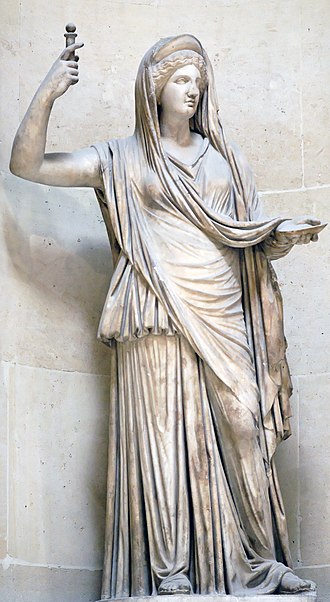 HeraGreek goddess, wife and sister of Zeus
 -
.jpg/330px-%CE%9F_%CE%86%CF%81%CE%B7%CF%82_(Borghese-%CE%9B%CE%BF%CF%8D%CE%B2%CF%81%CE%BF%CF%85).jpg) AresGreek god of war and combat
AresGreek god of war and combat -
_and_Pluto_(as_Serapis)%2C_from_the_Sanctuary_of_the_Egyptian_Gods_at_Gortyna%2C_mid-2nd_century_AD%2C_Heraklion_Archaeological_Museum_(30305313721).jpg/330px-Detail_of_Pluto-Serapis%2C_Statue_group_of_Persephone_(as_Isis)_and_Pluto_(as_Serapis)%2C_from_the_Sanctuary_of_the_Egyptian_Gods_at_Gortyna%2C_mid-2nd_century_AD%2C_Heraklion_Archaeological_Museum_(30305313721).jpg) HadesGod of the underworld in Greek mythology
HadesGod of the underworld in Greek mythology
More of its best-linked gods
In company
Pantheons, read from the members’ own records — never from a fixed roster.
Twelve Olympians 13 members on record Explore the pantheon
- ZeusGreek god of the sky and king of the gods
- AthenaGoddess of wisdom and war in ancient Greek religion and mythology
- AphroditeGreek goddess of love, beauty, pleasure, and procreation
- ApolloGod in Greek and later Roman mythology
- ArtemisGoddess of the hunt and the wild in ancient Greek religion and mythology
- PoseidonOne of the twelve Olympians presiding over the sea, storms, earthquakes and horses
-
 DionysusAncient Greek god of winemaking and wine
 -
_Demeter_in_the_Museo_archeologico_nazionale.jpg/330px-(Venice)_Demeter_in_the_Museo_archeologico_nazionale.jpg) DemeterGreek goddess of the harvest, grains, and agriculture
DemeterGreek goddess of the harvest, grains, and agriculture -
 HephaestusGreek god of blacksmiths
 -
 HestiaGreek goddess of the hearth and the home
.JPG/250px-Sicily_Selinunte_Temple_E_(Hera).JPG)




.JPG/120px-0_Jupiter_-_Louvre_MR_254_-_Louvre-Lens_(2).JPG)
Figures · 578
Who to meet first
The figures its own texts, stories and traditions name — the most widely linked first, this collection’s own before those it shares.
-
 AchillesGreek mythological hero of the Trojan War
 -
_Ancient_Roman_statues_in_the_Museo_archeologico_nazionale_-_Ulysses.jpg/330px-(Venice)_Ancient_Roman_statues_in_the_Museo_archeologico_nazionale_-_Ulysses.jpg) OdysseusLegendary Greek king of Ithaca
OdysseusLegendary Greek king of Ithaca -
 Helen of TroyDaughter of Zeus in Greek mythology
 -
 AgamemnonSon of Atreus in Greek mythology
 -
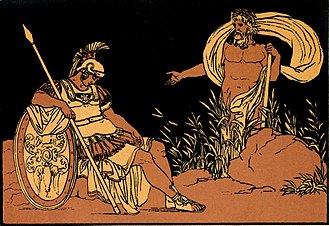 AeneasTrojan hero, son of Anchises and Aphrodite
 -
 CerberusThree-headed dog that guards the underworld in Greek mythology
 -
 SisyphusKing of Ephyra in Greek mythology
 -
%2C_peristyle._Naples%2C_Archaeological_Museum_8998_-_04_-_Detail_of_Andromeda.jpg/330px-Perseus_freeing_Andromeda%2C_from_Pompeii_VI.9.6_(House_of_the_Dioscuri)%2C_peristyle._Naples%2C_Archaeological_Museum_8998_-_04_-_Detail_of_Andromeda.jpg) AndromedaEthiopian princess in Greek mythology
AndromedaEthiopian princess in Greek mythology -
 HectorPrince of Troy in Greek mythology
 -
 ParisMythological son of Priam, king of Troy
 -
 MenelausMythical king of Sparta, husband of Helen of Troy
 -
.jpg/330px-Cassandra_(Stratford_Gallery).jpg) CassandraMythological prophetess and princess of Troy
CassandraMythological prophetess and princess of Troy
More of its best-linked figures
Places · 311
Holy places and sites
Temples, tombs, holy cities and sites recorded in this collection, the most widely linked first. A place is not a count of believers.
-

Parthenon
Former temple of Athena on the Athenian Acropolis, Greece -

Great Pyramid of Giza
Oldest and largest of the three pyramids in the Giza Necropolis; one of the seven ancient wonders of the world -
.jpg/330px-Pompeii_(4873744179).jpg) Archaeological site
Archaeological sitePompeii
Ancient Roman city near modern Naples, Italy -
.jpg/330px-Walls_of_Troy_(2).jpg) Archaeological site
Archaeological siteTroy
Ancient Homeric-era city in northwest Asia Minor; it is known as the setting for the Greek myth of the Trojan war -
 Archaeological site
Sparta
City and city-state in ancient Greece -
.jpg/330px-Palmira_al_capvespre_(2495033007).jpg) Archaeological site
Archaeological sitePalmyra
Ancient city in Homs Governorate, Syria -
 Archaeological site
Acropolis of Athens
Ancient citadel above the city of Athens -
 Archaeological site
Ephesus
Ancient Greek city in Anatolia -

Temple of Ephesian Artemis
Temple in Ephesus, one of the Seven Wonders of the Ancient World
311 places 311 with a point on the map 91 with a date 42 archaeological sites
See them on the atlasThe oldest on record
The earliest recorded starts among its best-known places, by 1000 CE, in date order. Each date is the place’s own — a city’s founding, a building’s — not the start of this tradition there.
- 3000 BCE Troy Archaeological site
- c. 2560 BCE Great Pyramid of Giza
- 14th century BCE Delphic Oracle
- 10th century BCE Ephesus Archaeological site
- c. 1000 BCE Priene Archaeological site
- the 900s BCE Sparta Archaeological site
- 8th century BCE Pergamon Archaeological site
- 8th century BCE Roman Forum Archaeological site
.jpg/250px-Walls_of_Troy_(2).jpg)


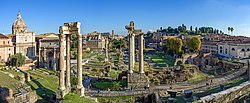
Where they gather
Cities and sites with two or more of its places recorded in them — counted from each place’s own location.
Texts and stories · 92
Stories and texts
What was told, and what was written — dated when it was written.
-
 Text
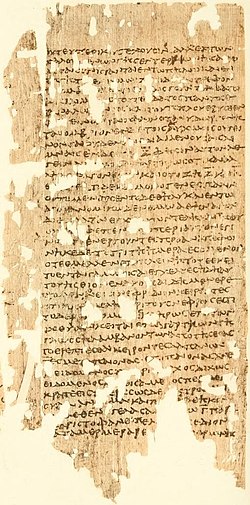
TextIliad
Epic poem attributed to Homer -
 Text
TextOdyssey
Epic poem attributed to Homer -
.jpg/250px-Mykonos_Pithos_2240_(Trojan_Horse_detail).jpg) Story
StoryTrojan Horse
Tale from Trojan War, a wooden horse used by the Greeks during the Trojan war -
 Text
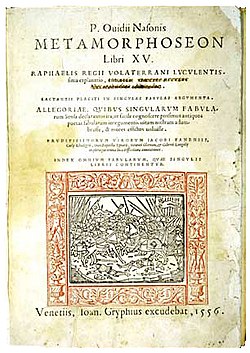
TextMetamorphoses
Narrative poem by Ovid -
 Text
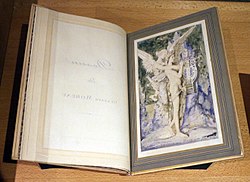
TextTheogony
Poem by Hesiod, describing the origins and genealogies of the greek gods -
 Story
Storygolden age
Far-gone period of primordial peace, harmony, stability, and prosperity, from Greek mythology
Festivals and practices · 37
Festivals, holy days and practices
Holy days with the day their record gives, then rites and practices. A festival recurs, so it has no date on the historical clock.
Holy days and festivals · 5, each with the day its record gives
-
.jpg/330px-Chariot_racing_bas-relief_-_Mus%C3%A9e_gallo-romain_de_Fourvi%C3%A8re_(Lyon).jpg) Observed on October 15
Observed on October 15October Horse
Animal sacrifice to Mars carried out on October 15 - Observed on March 17
Liberalia
Roman religious festival celebrating Liber and Libera - Observed on June 11
Matralia
Roman festival - Observed on August 25
Opiconsivia
Roman religious festival held in honor of Ops
1 more with a recorded day — the full list.
Rites and practices · 20, with no day on record
-

ancient Olympic Games
Athletic competitions in ancient Greece -

Nemean Games
One of the four Panhellenic Games, in honor of Nemean Zeus -
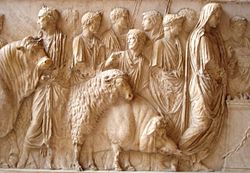
Suovetaurilia
Ancient Roman sacrifice -

Amburbia
Ancient Roman festival -

Elaphebolia
Religious festival in ancient Greece -
Isthmian Games
Ancient panhellenic festival to Isthmian Poseidon in Greece
14 more — the full list.
Festivals, practices and events follow how densely Wikidata records them, not how much a tradition keeps: 77% of the 845 held across the collections are Christian, and this collection holds 37.
Traditions · 15
Many paths, shared histories
The traditions, schools and movements this collection holds — each with its own page.
-

Ancient Greek religion
Religion in ancient Greece -
_and_Cautes_(right)%2C_from_the_Mithraeum_at_Sidon_(Colonia_Aurelia_Pia%2C_Syria)%2C_Louvre_Museum_(9365068428).jpg/250px-Statutory_group_depicting_the_cult_of_Mithras%2C_Mithras_slaying_the_bull_accompagnied_by_his_two_torchbeares_Cautopates_(left)_and_Cautes_(right)%2C_from_the_Mithraeum_at_Sidon_(Colonia_Aurelia_Pia%2C_Syria)%2C_Louvre_Museum_(9365068428).jpg)
Mithraic mysteries
Ancient Iranian religion in Iran and Roman Empire -

Eleusinian Mysteries
Secret religious rites in ancient Greece -

Orphism
Set of religious beliefs and practices originating in the ancient Greek and Hellenistic world -

Lenaia
Festival of Dionysus in Athens -
_(3470740119).jpg/250px-Table_support_with_a_Dionysiac_group_(AD_170-180)_(3470740119).jpg)
Dionysian Mysteries
Ritual of ancient Greece and Rome -

Anthesteria
Festivals in honor of Dionysus -

mysteries of Isis
Religious initiation rites performed in the cult of the goddess Isis in the Greco-Roman world
Offices and houses · 3
Offices and houses
Recorded in this collection, the most widely linked first. An office is a line of holders, not a family. A ruling house’s affiliation is the family’s, not its subjects’ practice.
Argued, cited and signed
Explained connections that reach into it: a claim, its evidence, its limits.
- Aphrodite and the Near Eastern love goddesses A long-standing argument derives Aphrodite partly from Near Eastern goddesses of love and war — Ishtar and Astarte — transmitted through Cyprus and Phoenician contact.
- Roman Mithras and Iranian Mithra The Roman mysteries of Mithras take their god's name from the Iranian Mithra, and very little else that can be demonstrated.
What this collection holds
Counted, not scored. Each count opens its list.
A record can be more than one kind — a monastery is a place and an institution — so these counts add up to more than its 2,123 records. The sections above count the same way, and draw each record once, under the kind its own page is filed under.
- Statements
- 12,969
- With references
- 2,858
- Undated
- 2,000
- Accounts
- 0
- Reviewed here
- 0
What it is missing, and how it was assembled
What this collection is missing
Written by an editor, not computed. A count of records cannot say any of this, and a collection read without it is a collection read wrongly.
- Local cults are thin: Wikidata records the Panhellenic gods far better than the deity of a single Arcadian valley.
- Roman equivalence is recorded as identification, and the identification is usually Roman rather than Greek — asserted by the borrowing side.
- Almost no narrative variant is attributed to a specific line of a specific work yet; the ones that are, are marked.
Counted across the collections
Festivals, practices and events follow how densely Wikidata records them, not how much a tradition keeps: 77% of the 845 held across the collections are Christian, and this collection holds 37.
What the counts mean
- Statements
- Relationships and facts recorded on these records.
- With references
- Statements that cite a source outside Wikimedia.
- Undated
- Records with no date on any of the three clocks.
- Accounts
- Named versions of a story, kept apart.
- Reviewed here
- Read by a person and signed with a date.
How it was assembled
Discovered from Wikidata by class and by religion, ranked by incoming links, then filtered against each item’s own claims. Relationships are imported statements unless a row says otherwise; none of them has been read here.
“Reviewed” means a person read it and signed it with a date — which is why it is zero. Nothing here measures how good the material is.
Records here have an article in 16 languages between them. The interface is English only for now. Published 2026-09-25.
How 25 of these records were placed here through another record
Most records are in Greek and Roman by their own statements. These are here because of another record they are linked to — worked out when the data was built, not stated on the record itself. Each one’s own page says the same.
Cities and sites, through the places recorded in them · 2
Places, through the god they are dedicated to · 11
- Argive Heraion — it is dedicated to Hera
- Shrine of Venus Cloacina — it is dedicated to Venus
- Altis — it is dedicated to Zeus
- Temple of Hera, Paestum — it is dedicated to Hera
- Tavole Palatine — it is dedicated to Hera
- Temple of Bona Dea — it is dedicated to Bona Dea
and 5 more
Parts, through the whole they belong to · 3
- Cave of Apollo Ipakrion — it is part of Caves of Apollo, Zeus and Pan
- Cave of Pan — it is part of Caves of Apollo, Zeus and Pan
- Epidotes — it is part of Epidotai
Works, through their main subject · 3
- Metamorphoses — its main subject is Roman mythology
- Theogony — its main subject is Greek mythology
- Bibliotheca — its main subject is Greek mythology
Gods, through a parent or a consort · 2
Pantheons, through their own published gods · 4
- Twelve Olympians — 13 of its 13 published gods are in this collection
- Etruscan mythology — 18 of its 18 published gods are in this collection
- Dii Consentes — 12 of its 12 published gods are in this collection
- di indigetes — 48 of its 48 published gods are in this collection
.jpg/960px-Olympic_Flame%2C_the_Start_of_the_Olympic_Torch_Relay_(51224124860).jpg)
.jpg)
Keep going
Walk Greek and Roman another way.
A family tree as the accounts give it, every mapped place on the atlas, and the dates on the timeline — each on its own clock.