

Tradition collection 377 records
Ancient Egypt
Three thousand years of gods whose names, forms and relationships changed with the dynasty and the city.
- Extent Nile valley and Nubia, roughly 3100 BCE to 400 CE.
- Holds 195 gods · 145 places · 20 figures · 6 texts and stories
Before you count
Egyptian theology is local and periodised, and a single 'parent of' row flattens a god who was a different god at Memphis and at Thebes.
Gods · 195
The gods, and the company they keep
The most widely linked across Wikipedia, this collection’s own first. A picture of a god is a work of art, never a likeness.
-
 IsisEgyptian deity
 -
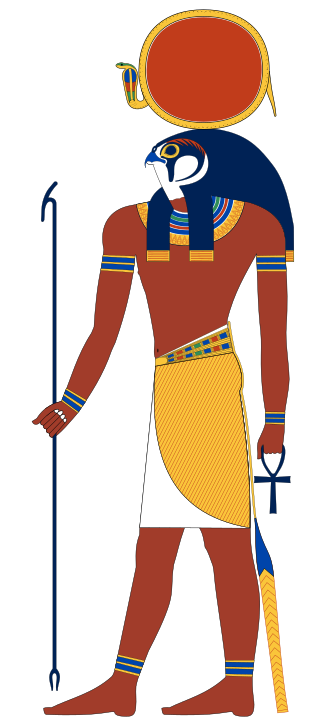 RaAncient Egyptian solar deity
 -
 OsirisGod of the afterlife in Egyptian mythology
 -
 AnubisEgyptian deity of mummification and the afterlife, usually depicted as a man with a canine head
 -
 HorusEgyptian sky deity
 -
.svg/330px-Amun_post_Amarna_(azure_skin_color).svg.png) AmunEgyptian and Berber deity
AmunEgyptian and Berber deity -
 AtenAncient Egyptian god
 -
 HathorMajor goddess in ancient Egyptian religion
 -
 SethGod of the desert, storms, and foreigners in ancient Egyptian religion
 -
 BastetEgyptian cat deity
 -
 ImhotepEgyptian architect, physician, astronomer, and god of medicine in ancient Egyptian mythology.
 -
 ThothEgyptian deity
In company
Pantheons, read from the members’ own records — never from a fixed roster.
Egyptian mythology 98 members on record Explore the pantheon
-
 BesEgyptian deity
 -
 SerapisGraeco-Egyptian god
 -
 HermanubisGreco-Egyptian divinity
 -
 MehenEgyptian god
 -
 ShedAncient Egyptian deity
 -
 HarmachisEgyptian deity
 -
 Ptah-PatekEgyptian deity
 -
 Ptah-Sokar-OsirisEgyptian deity
 -
 sphinxMythological creature with the head of a human and the body of a lion
 -
 Ancient Egyptian conception of the soulAncient Egyptian religious concept
Not their own pictures Ptah-Sokar-Osiris — lead image of the French Wikipedia article Ancient Egyptian conception of the soul — Ba-bird-72.4178, archaeological artefact

Places · 145
Holy places and sites
Temples, tombs, holy cities and sites recorded in this collection, the most widely linked first. A place is not a count of believers.
-
_31.jpg/500px-Gro%C3%9Fer_Tempel_(Abu_Simbel)_31.jpg)
Abu Simbel
UNESCO World Heritage Site in southern Egypt -
.jpg/330px-Luxor%2C_Tal_der_K%C3%B6nige_(1995%2C_860x605).jpg)
Valley of the Kings
Necropolis in ancient Egypt -
 Archaeological site
Thebes
Ancient Egyptian city -

Karnak Temple Complex
Ancient Egyptian temple complex -
 Archaeological site
Saqqara
Village in Giza Governorate, Egypt -

Heliopolis
City of ancient Egypt -

Luxor Temple
Ancient Egyptian tem -

Abydos
City in ancient Egypt -

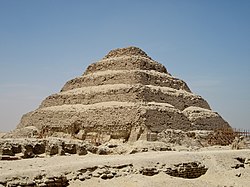
Pyramid of Djoser
Archeological site in Egypt
145 places 145 with a point on the map 37 with a date 19 archaeological sites
See them on the atlasThe oldest on record
The earliest recorded starts among its best-known places, by 1000 CE, in date order. Each date is the place’s own — a city’s founding, a building’s — not the start of this tradition there.

.jpg/250px-Bent_Pyramid_featuring_the_original_polished_limestone_outer_casing_that_the_pyramids_used_to_have_(14616487960).jpg)



Where they gather
Cities and sites with two or more of its places recorded in them — counted from each place’s own location.
Figures · 20
Who to meet first
The figures its own texts, stories and traditions name — the most widely linked first, this collection’s own before those it shares.
- sphinxMythological creature with the head of a human and the body of a lion
-
 Necho II2nd Egyptian pharaoh of the 26th dynasty
 - Ancient Egyptian conception of the soulAncient Egyptian religious concept
-
 NefertitiEgyptian queen and Great Royal Wife (chief consort) of Akhenaten, an Egyptian Pharaoh
 -
 Manetho3rd-century BC Egyptian historian and priest
 -
.jpg/330px-Tomb_of_Nefertari_(52785688763).jpg) NefertariAncient Egyptian queen consort
NefertariAncient Egyptian queen consort -
 TiyeGreat Royal Wife of the Egyptian pharaoh Amenhotep III
 -
 Ptolemy XIV of EgyptEgyptian puppet pharao as the husband of Cleopatra VII
 -
 IsetnofretAncient Egyptian queen consort
 -
 Pinedjem IIEgyptian high priest of Amun
 -
 KhaemwesetAncient Egyptian prince and High Priest of Ptah
 -
 DjedkhonsuefankhEgyptian High Priest of Amun
Not their own pictures Ancient Egyptian conception of the soul — Ba-bird-72.4178, archaeological artefact Manetho — lead image of the English Wikipedia article
More of its best-linked figures
Texts and stories · 6
Stories and texts
What was told, and what was written — dated when it was written.
-
 Text
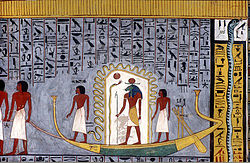
TextBook of Gates
Ancient Egyptian funerary text - Text
Assessors of Maat
The 42 judges before whom the deceased stands trial in the afterlife, in accordance with Ancient Egyptian religion (Kemetism; Neterism). / Wikimedia list article - Story
Ancient Egyptian creation myths
Ancient Egyptian accounts of the creation of the world - Story
Destruction of humanity by Hathor
Egyptian myth - Story
Heliopolitan creation myth
- Story
myth of Ra
Myths telling the story of the Ra Egyptian god
Traditions · 6
Many paths, shared histories
The traditions, schools and movements this collection holds — each with its own page.
-

religion of ancient Egypt
System of polytheistic beliefs and rituals of ancient Egyptian -
Four sons of Horus
Ancient Egyptian gods -
atenism
Monotheistic religion -

Kemetism
Contemporary revival of Ancient Egyptian religion primarily practised by those of African descent -
Fellowship of Isis
International spiritual organisation focused on the Goddess Isis -
Ankh Church of Eternal Life
Hungarian Kemetic denomination (1999-)
Offices and houses · 6
Offices and houses
Recorded in this collection, the most widely linked first. An office is a line of holders, not a family. A ruling house’s affiliation is the family’s, not its subjects’ practice.
- House
Thirtieth Dynasty of Egypt
Ancient Egyptian dynasty - House
Eighteenth Dynasty of Egypt
Dynasty of Egypt between 1550 BCE and 1295 BCE, notably comprising Akenaten and Hatshepsut - House
Nineteenth Dynasty of Egypt
Egyptian dynasty from -1295 to -1186 - House
Twentieth Dynasty of Egypt
Period from 1189 to 1077 BCE - Office
High Priest of Amun
Priestly title in ancient Egypt - Office
High Priest of Ptah
Priestly title in ancient Egypt
What this collection holds
Counted, not scored. Each count opens its list.
A record can be more than one kind — a monastery is a place and an institution — so these counts add up to more than its 377 records. The sections above count the same way, and draw each record once, under the kind its own page is filed under.
- Statements
- 915
- With references
- 62
- Undated
- 315
- Accounts
- 0
- Reviewed here
- 0
What it is missing, and how it was assembled
What this collection is missing
Written by an editor, not computed. A count of records cannot say any of this, and a collection read without it is a collection read wrongly.
- Egyptian theology is local and periodised, and a single 'parent of' row flattens a god who was a different god at Memphis and at Thebes.
- Transliterated names vary by school; the label shown is Wikidata's, not a normalised one.
- Temple activity is recorded as a building date far more often than as documented worship.
Counted across the collections
Festivals, practices and events follow how densely Wikidata records them, not how much a tradition keeps: 77% of the 845 held across the collections are Christian, and this collection holds none.
What the counts mean
- Statements
- Relationships and facts recorded on these records.
- With references
- Statements that cite a source outside Wikimedia.
- Undated
- Records with no date on any of the three clocks.
- Accounts
- Named versions of a story, kept apart.
- Reviewed here
- Read by a person and signed with a date.
How it was assembled
Discovered from Wikidata by class and by religion, ranked by incoming links, then filtered against each item’s own claims. Relationships are imported statements unless a row says otherwise; none of them has been read here.
“Reviewed” means a person read it and signed it with a date — which is why it is zero. Nothing here measures how good the material is.
Records here have an article in 16 languages between them. The interface is English only for now. Published 2026-09-25.
How 5 of these records were placed here through another record
Most records are in Ancient Egypt by their own statements. These are here because of another record they are linked to — worked out when the data was built, not stated on the record itself. Each one’s own page says the same.
Cities and sites, through the places recorded in them · 1
- Thebes — 2 of the 2 places recorded in it here are in this collection
Places, through the god they are dedicated to · 2
- Serabit el-Khadim — it is dedicated to Hathor
- Temple of Monthu — it is dedicated to Monthu
Parts, through the whole they belong to · 1
- Temple of Hibis — it is part of Hibis
Works, through their main subject · 1
- Book of Gates — its main subject is Egyptian mythology


Keep going
Walk Ancient Egypt another way.
A family tree as the accounts give it, every mapped place on the atlas, and the dates on the timeline — each on its own clock.