

Tradition collection 8,680 records
Christianity
Its branches, councils, saints, offices and buildings — and where they stopped recognising each other.
- Extent Worldwide, 1st century CE to the present.
- Holds 3,334 figures · 2,576 places · 1,353 traditions · 2,591 institutions, offices, houses and objects
Before you count
Wikidata's coverage of Christianity is far denser than of any other tradition here, which distorts every count that compares them.
Figures · 3,334
Who to meet first
The figures its own texts, stories and traditions name — the most widely linked first, this collection’s own before those it shares.
-
.jpg/330px-Lucas_Cranach_d.%C3%84._-_Martin_Luther%2C_1528_(Veste_Coburg).jpg) Martin LutherGerman priest and theologian (1483–1546)
Martin LutherGerman priest and theologian (1483–1546) -
 Saint PeterApostle of Jesus Christ
 -
 John CalvinFrench Protestant reformer (1509–1564)
 -
 Santa ClausLegendary figure said to deliver gifts to people on Christmas Eve
 -
 John the Baptist1st-century Jewish itinerant preacher (Bible)
 -
 Henry VIII of EnglandKing of England from 1509 to 1547 (1491–1547)
 -
 Alexander I of RussiaThe tenth Emperor of Russia (1777–1825)
 -
 King ArthurLegendary British leader of the late 5th and early 6th centuries
 -
.jpg/330px-Joseph_Smith%2C_Jr._(1843_photograph).jpg) Joseph SmithAmerican religious leader and founder of the Latter Day Saint movement (1805–1844)
Joseph SmithAmerican religious leader and founder of the Latter Day Saint movement (1805–1844) -
 Matthew the ApostleChristian evangelist and apostle (10-74)
 -
 Mary MagdaleneFollower of Jesus (–100)
 -
 John the ApostleApostle of Jesus; son of Zebedee and Salome, brother of James; traditionally identified with John the Evangelist, John of Patmos, and the Beloved Disciple
More of its best-linked figures
Places · 2,576
Holy places and sites
Temples, tombs, holy cities and sites recorded in this collection, the most widely linked first. A place is not a count of believers.
-
.JPG/500px-0_Basilique_Saint-Pierre_-_Rome_(1).JPG)
Vatican City
Holy See's independent state, an enclave within Rome, Italy -
.jpg/330px-Palestine-06314_-_West_Bank_(34121979493).jpg)
Bethlehem
City in the West Bank, Palestine -

Hagia Sophia
Mosque, museum, and former church in Istanbul, Turkey -
.jpg/330px-Santiago_de_Compostela%2C_Galiza_(cropped).jpg)
Santiago de Compostela
Municipality of Galicia, Spain -

Nazareth
City in Israel; predominantly inhabited by Muslim-Arab citizens of Israel; a center of Christian pilgrimage as the childhood home of Jesus -
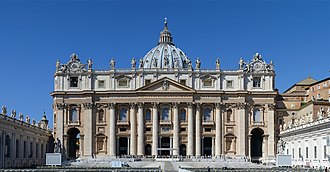
St. Peter's Basilica
Church in Vatican City -

Notre-Dame de Paris
Cathedral in Paris -
_-_2022-08-31_-_20.jpg/330px-Campanile_D%C3%B4me_-_Pise_(IT52)_-_2022-08-31_-_20.jpg)
Leaning Tower of Pisa
Cathedral bell tower in Pisa, Italy -

Basilica and Expiatory Church of the Holy Family
Basilica under construction since 1882 in Barcelona, Spain
2,576 places 2,576 with a point on the map 2,190 with a date 12 archaeological sites
See them on the atlasThe oldest on record
The earliest recorded starts among its best-known places, by 1000 CE, in date order. Each date is the place’s own — a city’s founding, a building’s — not the start of this tradition there.


_-_Right_side_and_front.jpg/250px-Pantheon_(Rome)_-_Right_side_and_front.jpg)


.jpg/250px-Church_of_the_Nativity_(7703592746).jpg)

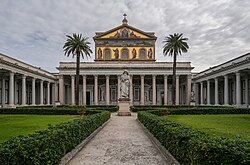
Where they gather
Cities and sites with two or more of its places recorded in them — counted from each place’s own location.
Traditions · 1,353
Many paths, shared histories
The traditions, schools and movements this collection holds — each with its own page.
-

Bible
Collection of sacred books in Judaism and Christianity -

Christianity
Abrahamic monotheistic religion -

True Jesus Church
Non-denominational Christian church founded in Beijing, China -
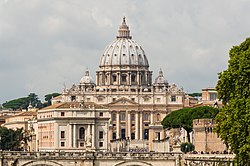
Catholic Church
Largest Christian Church, made up of 24 autonomous Churches in communion with the Pope, part of the Latin Church aka Latin Christianity a.k.a. western Christianity -

Protestantism
Branch of Christianity that emerged following the Protestant Reformation of the 16th century in opposition to the Roman Catholic Church and rejects papal supremacy -
Catholicism
Christian doctrine professed by the Catholic Church -

Eastern Orthodox Church
Second-largest Christian church -

Jehovah's Witnesses
Non-trinitarian millenarian restorationist Christian denomination
Institutions, offices, houses and objects · 2,591
Institutions, offices, houses and objects
Recorded in this collection, the most widely linked first. An office is a line of holders, not a family. A ruling house’s affiliation is the family’s, not its subjects’ practice.
-
.jpg/250px-Leo_XIV_(13_October_2025).jpg) Office
OfficePope
Bishop of Rome and head of the Roman Catholic church -
 Office
bishop
Ordained or consecrated member of the Christian clergy - Institution
Society of Jesus
Male religious institute of the Roman Catholic Church - Office
cardinal
Senior ecclesiastical official of the Catholic Church -
 Office
apostle
Primary disciples of Jesus in the New Testament -
_in_Duhok_(Nohaadra)_12.jpg/250px-The_Akitu%2C_Assyrian_New_Year%2C_festival_(2019)_in_Duhok_(Nohaadra)_12.jpg) Institution
InstitutionAssyrians
Ethnic group native to Mesopotamia
Events · 413, 385 dated
Events, in time order
The 12 most widely linked, set out by their own dates on the historical clock.
- 325 CE
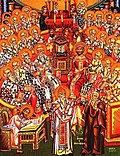
First Council of Nicaea
May 325 CE – July 325 CE Council of Christian bishops in Nicaea, 325 - 381 CE
First Council of Constantinople
May 381 CE – July 381 CE 381 AD council of Christian bishops - 431 CE
First Council of Ephesus
22 June 431 CE – 31 July 431 CE Ecumenical council in Ephesus in June–July 431, convened by Emperor Theodosius II - 451 CE
Council of Chalcedon
8 October 451 CE – 1 November 451 CE Synod - 787 CE
Second Council of Nicaea
24 September 787 CE – 23 October 787 CE Ecumenical council of the Eastern Orthodox Church and the Catholic Church (787 AD) - 1054 CE
East-West Schism
July 1054 CE Division of Christianity into two large parts in 1054 - 1378 CE
Western Schism
1378 CE – 1417 CE Split within the Catholic Church from 1378 to 1417, in which bishops in Rome and Avignon both claimed to be the pope, joined by a third line of Pisan popes in 1409 - 1414 CE
Council of Constance
5 November 1414 CE – 22 April 1418 CE Catholic ecumenical council (1414–1418) held in Constance that ended the Western Schism and condemned Jan Hus - 1517 CE
Protestant Reformation
31 October 1517 CE – 1648 CE 16th-century movement in Western Christianity - 1545 CE
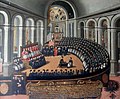
Council of Trent
13 December 1545 CE – 21 February 1563 CE 19th Ecumenical Council of the Catholic Church - 1869 CE
First Vatican Council
1869 CE – 20 October 1871 CE Synod of the Catholic church (1869–1870) - 1962 CE
Second Vatican Council
11 October 1962 CE – 8 December 1965 CE Roman Catholic council, met 1962 to 1965


.jpg/120px-Grandes_Chroniques_de_Frances_de_Charles_V_-_BNF_fr2813_f208_(Clercs_se_disputant).jpg)




Texts and stories · 321
Stories and texts
What was told, and what was written — dated when it was written.
-
 Text
TextLord's Prayer
Central Christian prayer, taught by Jesus Christ to his disciples -
_recto_Matt_26%2C_19-37.jpg/250px-Ann_Arbor%2C_University_of_Michigan_Ms_P.Mich.inv._1570_(Papyrus_37)_recto_Matt_26%2C_19-37.jpg) Text
TextNew Testament
Second division of the Christian biblical canon -
 Text
TextOld Testament
First division of the Christian biblical canon -
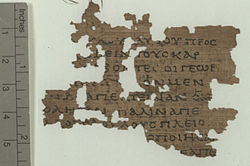 Text
TextGospel of Matthew
Book of the New Testament -
 Text
TextGospel
Book which describes the life and teachings of Jesus -
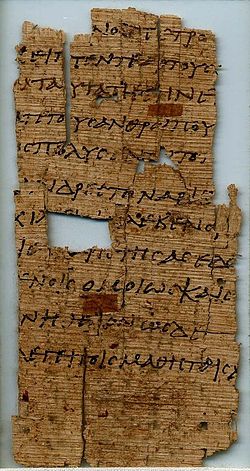 Text
TextGospel of John
One of the four canonical gospels in the New Testament
Festivals and practices · 235
Festivals, holy days and practices
Holy days with the day their record gives, then rites and practices. A festival recurs, so it has no date on the historical clock.
Holy days and festivals · 87, each with the day its record gives
-
.jpg/330px-Adoration_of_the_Shepherds%2C_Murillo_(Prado_Museum).jpg) Observed on December 25 and 5 other days
Observed on December 25 and 5 other daysChristmas
Holiday originating in Christianity, usually December 25 -
 Observed on March 22 and 2 other days
Easter
Christian commemoration of the resurrection of Jesus -
.jpg/330px-Ingeborg_Psalter_02f_1200_(cropped).jpg) Observed on Easter + 49 days
Observed on Easter + 49 daysPentecost
Christian holiday commemorating the New Testament stories of the Holy Spirit descenting upon the Apostles of Jesus -
 Observed on Easter − 2 days
Good Friday
Christian holiday -
 Observed on Easter − 7 days
Palm Sunday
Commemoration of the triumphal entry of Jesus into Jerusalem -
 Observed on November 1
All Saints' Day
Christian feast day -
 Observed on January 6 and 1 other day
Epiphany
Christian feast, public holiday in some countries -
 Observed on Easter − 46 days
Ash Wednesday
First day of Lent in the Western Christian and Catholic calendar
79 more with a recorded day — the full list.
Rites and practices · 144, with no day on record
-
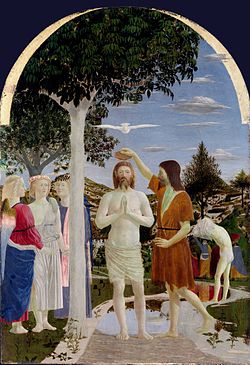
baptism
Christian rite of admission and adoption, almost invariably with the use of water -

communion
Christian rite observed by consuming bread and wine -

Holy Week
Annual weeklong Christian religious observance preceding Easter -

Lent
Penitential season in preparation for the observance of Easter -

Advent
Christian liturgical season preceding Christmas -

sacrament
Sacred rite recognized as of particular importance and significance
138 more — the full list.
Wikidata records festivals, practices and events far more densely for Christianity than for any other tradition: 648 of the 845 held across the collections (77%) are Christian. A thinner section on another collection’s page is a difference in the records, not in the traditions.
Gods · 18
The gods, and the company they keep
The most widely linked across Wikipedia, this collection’s own first. A picture of a god is a work of art, never a likeness.
-
.jpg/330px-Spas_vsederzhitel_sinay_(cropped1).jpg) Jesus ChristCentral figure of Christianity (c. 6 or 4 BC – AD 30 or 33)
Jesus ChristCentral figure of Christianity (c. 6 or 4 BC – AD 30 or 33) -
 God the FatherIn Christianity, the first of the three persons of the Trinity, who begets the Son and from whom the Holy Spirit proceeds
 -
 God the SonIn Christianity, the second person of the Trinity, begotten by God the Father, incarnated as Jesus Christ
 -
 God in ChristianityChristian conception of God
 -
.jpg/330px-Holy_Spirit_as_Dove_(detail).jpg) God the Holy SpiritIn trinitarian Christianity, the third person of the Trinity, that proceeds from the Father (and the Son, depending on the branch of Christianity); often depicted as a dove in iconography
God the Holy SpiritIn trinitarian Christianity, the third person of the Trinity, that proceeds from the Father (and the Son, depending on the branch of Christianity); often depicted as a dove in iconography -
 Holy WisdomAttribute of God in Jewish and Christian theology
More of its best-linked gods
In company
Pantheons, read from the members’ own records — never from a fixed roster.

What this collection holds
Counted, not scored. Each count opens its list.
A record can be more than one kind — a monastery is a place and an institution — so these counts add up to more than its 8,680 records. The sections above count the same way, and draw each record once, under the kind its own page is filed under.
- Statements
- 47,069
- With references
- 14,428
- Undated
- 1,757
- Accounts
- 0
- Reviewed here
- 0
What it is missing, and how it was assembled
What this collection is missing
Written by an editor, not computed. A count of records cannot say any of this, and a collection read without it is a collection read wrongly.
- Wikidata's coverage of Christianity is far denser than of any other tradition here, which distorts every count that compares them.
- Saints are recorded in bulk and read in detail almost nowhere.
- Parish churches dominate the place data by volume; the atlas ranks by how widely a site is linked to keep that from swamping it.
Counted across the collections
Wikidata records festivals, practices and events far more densely for Christianity than for any other tradition: 648 of the 845 held across the collections (77%) are Christian. A thinner section on another collection’s page is a difference in the records, not in the traditions.
What the counts mean
- Statements
- Relationships and facts recorded on these records.
- With references
- Statements that cite a source outside Wikimedia.
- Undated
- Records with no date on any of the three clocks.
- Accounts
- Named versions of a story, kept apart.
- Reviewed here
- Read by a person and signed with a date.
How it was assembled
Discovered from Wikidata by class and by religion, ranked by incoming links, then filtered against each item’s own claims. Relationships are imported statements unless a row says otherwise; none of them has been read here.
“Reviewed” means a person read it and signed it with a date — which is why it is zero. Nothing here measures how good the material is.
Records here have an article in 16 languages between them. The interface is English only for now. Published 2026-09-25.
How 420 of these records were placed here through another record
Most records are in Christianity by their own statements. These are here because of another record they are linked to — worked out when the data was built, not stated on the record itself. Each one’s own page says the same.
Cities and sites, through the places recorded in them · 9
- Vatican City — 7 of the 8 places recorded in it here are in this collection
- Jerusalem — 10 of the 44 places recorded in it here are in this collection
- Santiago de Compostela — 1 of the 1 places recorded in it here are in this collection
- Assisi — 8 of the 8 places recorded in it here are in this collection
- Częstochowa — 2 of the 2 places recorded in it here are in this collection
- Lourdes — 1 of the 1 places recorded in it here are in this collection
and 3 more
Tombs, through the figures buried in them · 2
- Rachel's Tomb — it is the burial place of Rachel
- Vatican Necropolis — it is the burial place of Saint Peter
Figures and stories, through the text they appear in · 306
- Adam — it appears in Torah
- Solomon — it appears in Old Testament
- David — it appears in Old Testament
- Eve — it appears in Book of Genesis
- Noah — it appears in Old Testament
- Satan — it appears in Bible
and 300 more
Parts, through the whole they belong to · 79
- Gospel of Mark — it is part of Gospel
- Book of Revelation — it is part of New Testament
- Ten Commandments — it is part of Exodus 20
- Acts of the Apostles — it is part of New Testament
- Ecclesiastes — it is part of Old Testament
- Epistle to the Romans — it is part of New Testament
and 73 more
Works, through their main subject · 1
- Pistis Sophia — its main subject is Esoteric Christianity
Practices, through the kind they are · 23
- mass for the dead — it is a kind of Catholic Mass
- Tridentine Mass — it is a kind of Catholic Mass
- infant baptism — it is a kind of baptism
- believer's baptism — it is a kind of baptism
- baptism with the Holy Spirit — it is a kind of baptism
- Examination of conscience — it is a kind of Prayer in the Catholic Church
and 17 more


Keep going
Walk Christianity another way.
A family tree as the records give it, every mapped place on the atlas, and the dates on the timeline — each on its own clock.