
.jpg/960px-Gundestrupkedlen-_00054_(cropped).jpg)
Tradition collection 321 records
Celtic, Slavic and Baltic
Traditions recorded mostly by outsiders, or after conversion, or from folklore.
- Extent Western, central and eastern Europe, roughly 500 BCE to 1500 CE.
- Holds 240 gods · 52 figures · 10 texts and stories · 4 places
Before you count
The written sources are Greek, Roman, Christian or nineteenth-century folklorists, and the last of those often reconstructed what they went looking for.
Gods · 240
The gods, and the company they keep
The most widely linked across Wikipedia, this collection’s own first. A picture of a god is a work of art, never a likeness.
-
 PerunSlavic supreme god of the sky and war
 -
.jpg/330px-Gundestrupkedlen-_00054_(cropped).jpg) CernunnosDeity
CernunnosDeity -
 EponaCeltic goddess of horses
 -
 VelesSlavic god of earth, waters and the underworld
 -
 SvarogDeity in Slavic mythology
 -
 LughIrish mythological character and probable deity
 -
 MokoshSlavic mother goddess
 -
 PerkūnasDeity
 -
 BrigidCeltic deity
 -
 JariloDeity in Slavic mythology
 -
.jpg/330px-Svantevit-Statue_(cropped).jpg) SvetovitGod of Polabian Slavs
SvetovitGod of Polabian Slavs -
 MoranaDeity
In company
Pantheons, read from the members’ own records — never from a fixed roster.





.jpg/250px-Riders_of_th_Sidhe_(big).jpg)

.jpg/120px-Portugal_National_Museum_of_Archaeology_(28691245028).jpg)

Figures · 52
Who to meet first
The figures its own texts, stories and traditions name — the most widely linked first, this collection’s own before those it shares.
-
 MerlinLegendary British wizard
 -
 Cú ChulainnIrish mythological hero
 -
 LibušeMythical Bohemian princess
 -
 vodyanoyMale water spirit or fairy-tale character from Slavic mythology, tutelary deity
 -
 LeshyForest spirit in Slavic mythology, tutelary deity
 -
.jpg/330px-Queen_Maev_by_J.C._Leyendecker_(1911).jpg) MedbLegendary Irish queen
MedbLegendary Irish queen -
 KoscheiArchetypal male antagonist in Slavic folklore
 -
 Fionn mac CumhaillIrish mythical hero
 -
 Nuada AirgetlámLegendary figure
 -
 DeirdreHeroine in Irish mythology
 -
_Lamav_akt_b)_Kalev_kotka_se%2C_Oskar_Kallis%2C_EKM_j_24456-ab_M_5624-ab.jpg/330px-A)_Lamav_akt_b)_Kalev_kotka_se%2C_Oskar_Kallis%2C_EKM_j_24456-ab_M_5624-ab.jpg) KalevEstonian mythological king
KalevEstonian mythological king -
 LouhiWicked queen of the land known as Pohjola in Finnish and Karelian mythology
More of its best-linked figures
Texts and stories · 10
Stories and texts
What was told, and what was written — dated when it was written.
-
 Text
TextLāčplēsis
Latvian epic poem -
 Text
TextTáin Bó Cúailnge
Old Irish epiclike tale surviving in three 12th-century manuscripts -
 Text
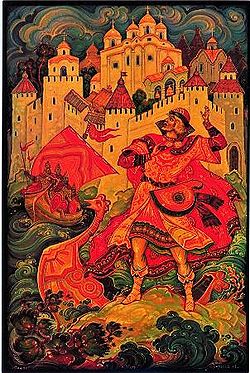
TextSadko
Mythology from Russia -
 Text
TextUlster Cycle
Group of old Irish tales and legends -
 Text
TextTochmarc Étaíne
Irish mythological text -
_--_Maxim_Sukharev.jpg/250px-Creation_of_the_Earth_(Belobog_and_Chernobog)_--_Maxim_Sukharev.jpg) Story
StorySlavic creation myth
Cosmogonic myth in Slavic mythology
Places · 4
Holy places and sites
Temples, tombs, holy cities and sites recorded in this collection, the most widely linked first. A place is not a count of believers.
-
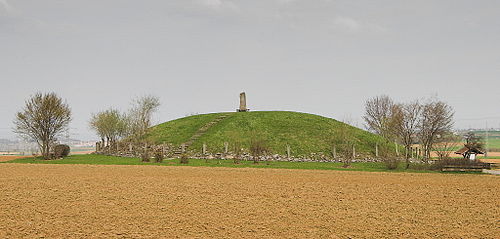
Hochdorf Chieftain's Grave
Burial chamber and museum -

Sanctuary of the Three Gauls
Religious structure in Lyon, France, dedicated to the imperial cult and used by the peoples of three provinces of Roman Gaul; known from fragments -

La Graufesenque
Archaeological site
4 places 4 with a point on the map none dated yet
See them on the atlasFestivals and practices · 4
Festivals, holy days and practices
Holy days with the day their record gives, then rites and practices. A festival recurs, so it has no date on the historical clock.
-
 Observed on first Monday in February and 1 other day
Imbolc
Celtic traditional festival marking the beginning of spring -
 Observed on May 1
Beltane
Gaelic May Day festival -
 Observed on August 1
Lughnasadh
Gaelic festival marking the beginning of the harvest season - Observed on November 1
Samhain
Gaelic festival marking the start of winter
Festivals, practices and events follow how densely Wikidata records them, not how much a tradition keeps: 77% of the 845 held across the collections are Christian, and this collection holds 4.
Traditions · 4
Many paths, shared histories
The traditions, schools and movements this collection holds — each with its own page.

.jpg/250px-Yan'_Dargent_-_Les_Lavandi%C3%A8res_de_la_nuit_(1888).jpg)
What this collection holds
Counted, not scored. Each count opens its list.
A record can be more than one kind — a monastery is a place and an institution — so these counts add up to more than its 321 records. The sections above count the same way, and draw each record once, under the kind its own page is filed under.
- Statements
- 795
- With references
- 95
- Undated
- 310
- Accounts
- 0
- Reviewed here
- 0
What it is missing, and how it was assembled
What this collection is missing
Written by an editor, not computed. A count of records cannot say any of this, and a collection read without it is a collection read wrongly.
- The written sources are Greek, Roman, Christian or nineteenth-century folklorists, and the last of those often reconstructed what they went looking for.
- Several well-known figures rest on a single line in a single chronicle, and the page says which line.
- Interpolations by Romantic-era scholars are a known hazard here and are not all identified.
Counted across the collections
Festivals, practices and events follow how densely Wikidata records them, not how much a tradition keeps: 77% of the 845 held across the collections are Christian, and this collection holds 4.
What the counts mean
- Statements
- Relationships and facts recorded on these records.
- With references
- Statements that cite a source outside Wikimedia.
- Undated
- Records with no date on any of the three clocks.
- Accounts
- Named versions of a story, kept apart.
- Reviewed here
- Read by a person and signed with a date.
How it was assembled
Discovered from Wikidata by class and by religion, ranked by incoming links, then filtered against each item’s own claims. Relationships are imported statements unless a row says otherwise; none of them has been read here.
“Reviewed” means a person read it and signed it with a date — which is why it is zero. Nothing here measures how good the material is.
Records here have an article in 16 languages between them. The interface is English only for now. Published 2026-09-25.
How 1 of these records were placed here through another record
Most records are in Celtic, Slavic and Baltic by their own statements. These are here because of another record they are linked to — worked out when the data was built, not stated on the record itself. Each one’s own page says the same.
Pantheons, through their own published gods · 1
- Lusitanian mythology — 2 of its 3 published gods are in this collection