

Tradition collection 1,943 records
Buddhist traditions
Theravāda, Mahāyāna and Vajrayāna, their figures, sutras, lineages and monasteries.
- Extent India, Sri Lanka, Southeast Asia, Tibet, China, Korea and Japan, roughly 500 BCE to the present.
- Holds 1,173 places · 256 figures · 158 traditions · 152 gods
Before you count
Teacher transmission is the backbone of these traditions and the thinnest thing in the structured data: most lineages here are incomplete.
Places · 1,173
Holy places and sites
Temples, tombs, holy cities and sites recorded in this collection, the most widely linked first. A place is not a count of believers.
-

Lhasa
Prefecture-level city and capital of Tibet -

Borobudur Temple
Buddhist temple in Java, Indonesia -

Nara
City in Nara prefecture, Japan -
 Archaeological site
Angkor
Former capital city; region of Cambodia -

Potala Palace
7th-century Tibetan fortress and palace in Lhasa, rebuilt in the 17th century as the winter seat of the Dalai Lamas -

Anuradhapura
City in North Central Province, Sri Lanka -

Bagan
Ancient city in Myanmar -

Kiyomizu-dera
Buddhist temple in Higashiyama-ku, Kyoto -

Nalanda Mahavihara
Ancient Hindu-Buddhist monastery in present-day Bihar, India
1,173 places 1,173 with a point on the map 615 with a date 1 archaeological site
See them on the atlasThe oldest on record
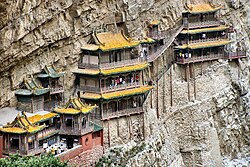
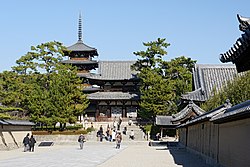
The earliest recorded starts among its best-known places, by 1000 CE, in date order. Each date is the place’s own — a city’s founding, a building’s — not the start of this tradition there.
.jpg/250px-27467-Luoyang_(49085730123).jpg)




Where they gather
Cities and sites with two or more of its places recorded in them — counted from each place’s own location.
Figures · 256
Who to meet first
The figures its own texts, stories and traditions name — the most widely linked first, this collection’s own before those it shares.
-
.jpg/330px-Buddha_in_Sarnath_Museum_(Dhammajak_Mutra).jpg) The BuddhaIndian philosopher and the founder of Buddhism (623 or 563 BCE – 543 or 483 BCE)
The BuddhaIndian philosopher and the founder of Buddhism (623 or 563 BCE – 543 or 483 BCE) -
 Nagarjuna3rd-century Indian Buddhist philosopher
 -
 Xuanzang7th-century Chinese Buddhist monk and scholar (602–664)
 -
.jpg/330px-%E6%8E%A5%E5%BC%95%E9%98%BF%E5%BC%A5%E9%99%80%E4%BD%9B_MET_DT5220_(cropped).jpg) Amitābha BuddhaCelestial buddha of Mahayana Buddhism
Amitābha BuddhaCelestial buddha of Mahayana Buddhism -
.jpg/330px-Thich_Nhat_Hanh_12_(cropped).jpg) Thích Nhất HạnhVietnamese Buddhist monk and activist (1926–2022)
Thích Nhất HạnhVietnamese Buddhist monk and activist (1926–2022) -
 DōgenJapanese Zen Buddhist teacher (1200-1253)
 -
 KūkaiJapanese Buddhist monk and calligrapher, the founder of the Shingon school (774–835)
 -
 NichirenFounder of Nichiren Buddhism in Japan
 -
 ZhiyiChinese Buddhist monk and founder of Tiantai tradition (538–597)
 -
 EisaiJapanese monk
 -
 HōnenJapanese Buddhist monk
 -
 ShinranJapanese Buddhist monk and founder of the Jōdo Shinshū sect (1173–1263)
More of its best-linked figures
Traditions · 158
Many paths, shared histories
The traditions, schools and movements this collection holds — each with its own page.
-

Buddhism
Indian religion -

Zen
School of Mahāyāna Buddhist Tradition -
Mahāyāna
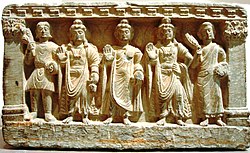
Branch of Buddhism popular in East Asia and Vietnam that sees the goal of becoming a buddha through the bodhisattva path as being available to all and sees the state of the arhat as incomplete -

Theravāda
Major branch of Buddhism following the Pāli Canon, dominant in Sri Lanka, Cambodia, Laos, Myanmar and Thailand -
Tibetan Buddhism
Form of Buddhism practiced in Tibet and Bhutan -
_(8697431158).jpg/250px-Ghanta_et_Vajra_(British_Museum)_(8697431158).jpg)
Vajrayana
Indian Buddhist tantric traditions given to Tibet, Bhutan, and East Asia -

Bon
Tibetan religion -
_(42096289494).jpg/250px-Le_Grand_Bouddha_du_Kotoku-in_(Kamakura%2C_Japon)_(42096289494).jpg)
Buddhism in Japan
Traditions of Buddhism popular in Japan
Gods · 152
The gods, and the company they keep
The most widely linked across Wikipedia, this collection’s own first. A picture of a god is a work of art, never a likeness.
-
 AvalokiteśvaraBodhisattva embodying compassion
 -
 MaitreyaFuture Buddha in Buddhist eschatology
 -
 MañjuśrīBodhisattva in Mahāyāna Buddhism, who represents the transcendent wisdom of the Buddhas
 -
 Māra PāpīyānGod of death and sin. Ruler of the 6th heaven in the Kāmadhātu
 -
_(cropped).jpg/330px-Statue_of_Guanyin%2C_February_5%2C_2019_(3)_(cropped).jpg) Guan YinChinese name of the bodhisattva Avalokiteśvara
Guan YinChinese name of the bodhisattva Avalokiteśvara -
 TārāFemale Bodhisattva
 -
 VairocanaCelestial Buddha embodying emptiness
 -
 KṣitigarbhaBodhisattva
 -
.jpg/330px-Yulin_Cave_3_w_wall_Samantabhadra_(Western_Xia).jpg) SamantabhadraIn Buddhism, a bodhisattva associated with practice and meditation
SamantabhadraIn Buddhism, a bodhisattva associated with practice and meditation -
 VajrapaniMahayana bodhisattva
 -
 AcalaWrathful deity and dharmapala (protector of the Dharma) prominent in Tibetan and East Asian Buddhism
 -
 VaiśravaṇaDeity in Buddhism
More of its best-linked gods
In company
Pantheons, read from the members’ own records — never from a fixed roster.
Eight Protectors of the Zodiac 8 members on record Explore the pantheon
- MañjuśrīBodhisattva in Mahāyāna Buddhism, who represents the transcendent wisdom of the Buddhas
- VairocanaCelestial Buddha embodying emptiness
- SamantabhadraIn Buddhism, a bodhisattva associated with practice and meditation
- AcalaWrathful deity and dharmapala (protector of the Dharma) prominent in Tibetan and East Asian Buddhism
-
 MahāsthāmaprāptaBodhisattva mahāsattva
 -
 ĀkāśagarbhaBodhisattva in Chinese, Japanese and Korean Buddhism
 -
.jpg/330px-2016_Singapur%2C_Chinatown%2C_%C5%9Awi%C4%85tynia_i_Muzeum_Relikwi_Z%C4%99ba_Buddy_(15).jpg) Thousand-Armed Thousand-Eyed AvalokiteśvaraManifestation of Avalokiteśvara which has a thousand arms
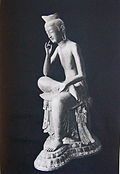
Thousand-Armed Thousand-Eyed AvalokiteśvaraManifestation of Avalokiteśvara which has a thousand arms - Amitābha BuddhaCelestial buddha of Mahayana Buddhism



.jpg/120px-Yulin_Cave_3_w_wall_Samantabhadra_(Western_Xia).jpg)
_(cropped).jpg/120px-Statue_of_Guanyin%2C_February_5%2C_2019_(3)_(cropped).jpg)


Texts and stories · 146
Stories and texts
What was told, and what was written — dated when it was written.
-
 Text
TextPāli Canon
Buddhist scriptures preserved in the Pāli language by the Theravada tradition -
 Text
TextHeart Sutra
Short Mahayana sutra, surviving in Sanskrit, Chinese and Tibetan, expounding the Two Truths doctrine that ultimately all phenomena are sunyata -
 Text
TextLotus Sutra
Mahayana sutra -
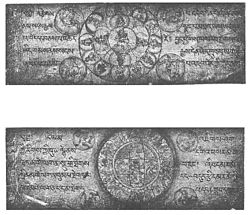 Text
TextBardo Thodol
Nyingma terma text revealed by Karma Lingpa -
 Text
TextTripitaka Koreana
Collection of wooden blocks imprinted with Korean Buddhist scriptures housed in a temple -
 Text
TextAvatamsaka Sutra
Sutra of Mahāyāna Buddhism
Festivals and practices · 34
Festivals, holy days and practices
Holy days with the day their record gives, then rites and practices. A festival recurs, so it has no date on the historical clock.
Holy days and festivals · 2, each with the day its record gives


Rites and practices · 30, with no day on record
-
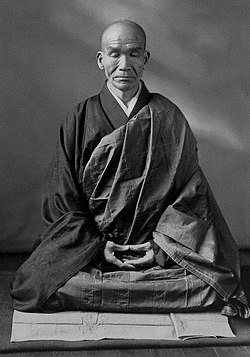
zazen
Sitting Meditation in Zen Buddhism -
_Meditation_in_Wat_Khung_Taphao.jpg/250px-(Buddhist_monk)_Meditation_in_Wat_Khung_Taphao.jpg)
Buddhist meditation
Meditation practice -

nianfo
Buddhist concept -

Shikoku Pilgrimage
Multi-site pilgrimage of 88 temples associated with the Buddhist monk Kūkai (Kōbō Daishi) on the island of Shikoku, Japan -

upasampadā
Buddhist ordination ceremony -

nékor
Meditative pilgrimage ritual
24 more — the full list.
Festivals, practices and events follow how densely Wikidata records them, not how much a tradition keeps: 77% of the 845 held across the collections are Christian, and this collection holds 39.
Offices and houses · 22
Offices and houses
Recorded in this collection, the most widely linked first. An office is a line of holders, not a family. A ruling house’s affiliation is the family’s, not its subjects’ practice.
-
 Office
Dalai Lama
Tibetan Buddhist spiritual teacher -
 Office
guru
Teacher, expert, counsellor, spiritual guide or leader, often in Hindu, Jain, Buddhist or Sikh traditions -
 House
HouseGoryeo
Ancient kingdom in the Korean peninsula (918–1392) -
 Office
Lama
Honorific title for a teacher of the Dharma in Tibetan Buddhism -
 Office
Panchen Lama
Priest in Tibetan Buddhism - House
Konbaung dynasty
Last dynasty of Myanmar, that ruled the Third Empire of Myanmar
Events · 5
Events
None has a date on record yet, so none is placed in time here; the most widely linked first.
- First Buddhist council Gathering of senior monks of the Buddhist order convened just after the Buddha's death
- Second Buddhist council Council, said to have taken place 70 years after the Buddha’s death, which resulted in the first schism in the Sangha between the Sthaviras and the Mahāsāṃghikas
- Third Buddhist council
- Fourth Buddhist council Two separate Buddhist council meetings
- Fifth Buddhist council 1871 meeting of Buddhist monks
Argued, cited and signed
Explained connections that reach into it: a claim, its evidence, its limits.
What this collection holds
Counted, not scored. Each count opens its list.
A record can be more than one kind — a monastery is a place and an institution — so these counts add up to more than its 1,943 records. The sections above count the same way, and draw each record once, under the kind its own page is filed under.
8 pantheons are listed above and 7 counted here: a pantheon is counted where its own record is filed, and listed wherever most of its members are.
- Statements
- 7,684
- With references
- 2,099
- Undated
- 1,022
- Accounts
- 0
- Reviewed here
- 0
What it is missing, and how it was assembled
What this collection is missing
Written by an editor, not computed. A count of records cannot say any of this, and a collection read without it is a collection read wrongly.
- Teacher transmission is the backbone of these traditions and the thinnest thing in the structured data: most lineages here are incomplete.
- One figure has different names in Sanskrit, Pali, Tibetan, Chinese and Japanese, and upstream sometimes has several records.
- Recognition of a lineage is contested in living cases, and only some contests are represented.
Counted across the collections
Festivals, practices and events follow how densely Wikidata records them, not how much a tradition keeps: 77% of the 845 held across the collections are Christian, and this collection holds 39.
What the counts mean
- Statements
- Relationships and facts recorded on these records.
- With references
- Statements that cite a source outside Wikimedia.
- Undated
- Records with no date on any of the three clocks.
- Accounts
- Named versions of a story, kept apart.
- Reviewed here
- Read by a person and signed with a date.
How it was assembled
Discovered from Wikidata by class and by religion, ranked by incoming links, then filtered against each item’s own claims. Relationships are imported statements unless a row says otherwise; none of them has been read here.
“Reviewed” means a person read it and signed it with a date — which is why it is zero. Nothing here measures how good the material is.
Records here have an article in 16 languages between them. The interface is English only for now. Published 2026-09-25.
How 28 of these records were placed here through another record
Most records are in Buddhist traditions by their own statements. These are here because of another record they are linked to — worked out when the data was built, not stated on the record itself. Each one’s own page says the same.
Cities and sites, through the places recorded in them · 11
- Lhasa — 12 of the 14 places recorded in it here are in this collection
- Nara — 19 of the 23 places recorded in it here are in this collection
- Angkor — 3 of the 7 places recorded in it here are in this collection
- Anuradhapura — 7 of the 7 places recorded in it here are in this collection
- Bagan — 6 of the 9 places recorded in it here are in this collection
- Bodh Gaya — 1 of the 1 places recorded in it here are in this collection
and 5 more
Tombs, through the figures buried in them · 1
- Tsuki no wa no misasagi — it is the burial place of Go-Sai
Parts, through the whole they belong to · 9
- Majjhima Nikāya — it is part of Pāli Canon
- Satipaṭṭhāna Sutta — it is part of Pāli Canon
- Anapanasati Sutta — it is part of Pāli Canon
- Mandala 10 — it is part of Rigveda
- Bhayabherava Sutta — it is part of Pāli Canon
- Dhammadāyāda-sutta — it is part of Pāli Canon
and 3 more
Works, through their main subject · 3
- Tripitaka — its main subject is Buddhism
- Long Scroll of the Treatise on the Two Entrances and Four Practices — its main subject is Zen
- Basic Points Unifying the Theravāda and the Mahāyāna — its main subject is Buddhism
Gods, through a parent or a consort · 1
- Jwala Ji — its father is Brahmā
Pantheons, through their own published gods · 3
- Four Heavenly Kings — 5 of its 5 published gods are in this collection
- Six Guanyin — 5 of its 5 published gods are in this collection
- Four Bodhisattvas (Lotus Sutra) — 4 of its 4 published gods are in this collection


Keep going
Walk Buddhist traditions another way.
A family tree as the records give it, every mapped place on the atlas, and the dates on the timeline — each on its own clock.