

Tradition collection 156 records
Anatolia and the ancient Balkans
Hittite, Phrygian, Etruscan, Thracian and Illyrian religion.
- Extent Anatolia, the Aegean and the Balkans, roughly 1700 BCE to 300 CE.
- Holds 80 gods · 63 places · 6 traditions · 4 figures
Before you count
Etruscan and Illyrian religion are known mainly through material culture and Roman description.
Gods · 80
The gods, and the company they keep
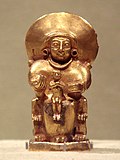
The most widely linked across Wikipedia, this collection’s own first. A picture of a god is a work of art, never a likeness.
-
 KubabaQueen of Sumer
 -
 TeshubGod of thunder
 -
 UniEtruscan goddess of love and marriage
 -
 MenrvaEtruscan goddess
 -
 AitaEtruscan death deity and epithet of Śuri
 -
 FuflunsEtruscan god of plants and wine
 -
 Sun goddess of ArinnaChief goddess and wife of the weather god Tarḫunna in Hittite mythology
 -
 ThesanEtruscan deity of births and sunrise
 -
 ŠauškaHurrian/Hittite feminine deity
 -
 TuchulchaEtruscan underworld diety
 -
 SarrumaDeity
 -
 TarhunHittite thunder deity
Not its own picture Fufluns — lead image of the Spanish Wikipedia article
In company
Pantheons, read from the members’ own records — never from a fixed roster.
Etruscan mythology 19 members on record Explore the pantheon
-
 TiniaEtruscan god
 - UniEtruscan goddess of love and marriage
-
 TuranEtruscan goddess
 -
 NethunsEtruscan water god
 -
 VanthEtruscan mythological figure
 -
 ApuluEtruscan god
 -
 MarisEtruscan deity
 -
 CharunOne of the psychopompoi of the underworld in Etruscan mythology
 -
 SelvansEtruscan god of boundaries
 -
 UsilEtruscan god of the sun
Not their own pictures Selvans — lead image of the English Wikipedia article Usil — lead image of the English Wikipedia article


Places · 63
Archaeological sites and places
60 of the 63 are recorded as archaeological sites — a culture’s cities and monuments, not evidence of worship there. The most widely linked first.
-
 Archaeological site
Mycenae
Ancient city, now an archaeological site in Argolis, Greece -
 Archaeological site
Knossos
Ancient Minoan through Roman administrative center and city -
 Archaeological site
Tiryns
Ancient city and archaeological site in Argolis, Greece -
 Archaeological site
Veii
Etruscan city -
.jpg/330px-Festos1(js).jpg) Archaeological site
Archaeological sitePhaistos
Ancient Greek city in Crete -
 Archaeological site
Akrotiri
Bronze Age settlement on the volcanic Greek island of Santorini (Thera) -
 Archaeological site
Alacahöyük
Ancient Hittite site in northern Turkey -
 Archaeological site
Zakros
Minoan archaeological site in Eastern Crete, Greece -
 Archaeological site
Keros
Island in the Cyclades, part of Greece
63 places 63 with a point on the map 8 with a date 60 archaeological sites
See them on the atlasThe oldest on record
The earliest recorded starts among its best-known places, by 1000 CE, in date order. Each date is the place’s own — a city’s founding, a building’s — not the start of this tradition there.
- 7000 BCE Knossos Archaeological site
- 30th century BCE Mycenae Archaeological site
- c. 30th century BCE Phaistos Archaeological site
- 17th century BCE Anemospilia
- 13th century BCE Yazılıkaya Archaeological site
- 13th century BCE Karabel relief Archaeological site
- 480 BCE Tomb of the Leopards Archaeological site


.jpg/250px-Festos1(js).jpg)


Traditions · 6
Many paths, shared histories
The traditions, schools and movements this collection holds — each with its own page.
-

Etruscan religion
Polytheistic religion practised in ancient Etruria -
Illyrian religion
The body of myths belonging to the Illyrian peoples -
Thracian religion
Religious beliefs and practices of the Thracians -
Mycenaean religion
Ancient Greek religion of the Mycenaean civilisation -
Hittite religion
Religion of the ancient Hittites -
Phrygian religion
Body of religious practice and doctrine in ancient Phrygia
Figures · 4
Who to meet first
The most widely linked across Wikipedia, this collection’s own first.


More of its best-linked figures
Also here · 1
Also in this collection
Kinds it holds only one or two of, each with its own page.
What this collection holds
Counted, not scored. Each count opens its list.
A record can be more than one kind — a monastery is a place and an institution — so these counts add up to more than its 156 records. The sections above count the same way, and draw each record once, under the kind its own page is filed under.
- Statements
- 480
- With references
- 16
- Undated
- 145
- Accounts
- 0
- Reviewed here
- 0
What it is missing, and how it was assembled
What this collection is missing
Written by an editor, not computed. A count of records cannot say any of this, and a collection read without it is a collection read wrongly.
- Etruscan and Illyrian religion are known mainly through material culture and Roman description.
- Hittite archives are rich and localised; what survives is what Hattusa kept.
- Names are transliterated from several scripts with no agreed convention.
Counted across the collections
Festivals, practices and events follow how densely Wikidata records them, not how much a tradition keeps: 77% of the 845 held across the collections are Christian, and this collection holds none.
What the counts mean
- Statements
- Relationships and facts recorded on these records.
- With references
- Statements that cite a source outside Wikimedia.
- Undated
- Records with no date on any of the three clocks.
- Accounts
- Named versions of a story, kept apart.
- Reviewed here
- Read by a person and signed with a date.
How it was assembled
Discovered from Wikidata by class and by religion, ranked by incoming links, then filtered against each item’s own claims. Relationships are imported statements unless a row says otherwise; none of them has been read here.
“Reviewed” means a person read it and signed it with a date — which is why it is zero. Nothing here measures how good the material is.
Records here have an article in 16 languages between them. The interface is English only for now. Published 2026-09-25.
How 2 of these records were placed here through another record
Most records are in Anatolia and the ancient Balkans by their own statements. These are here because of another record they are linked to — worked out when the data was built, not stated on the record itself. Each one’s own page says the same.
Gods, through a parent or a consort · 1
- Tarhun — its consort is Sun goddess of Arinna
Pantheons, through their own published gods · 1
- Etruscan mythology — 18 of its 18 published gods are in this collection


Keep going
Walk Anatolia and the ancient Balkans another way.
A family tree as the accounts give it, every mapped place on the atlas, and the dates on the timeline — each on its own clock.